




Story and Photos by Lexi Fisher and Chris Doyle
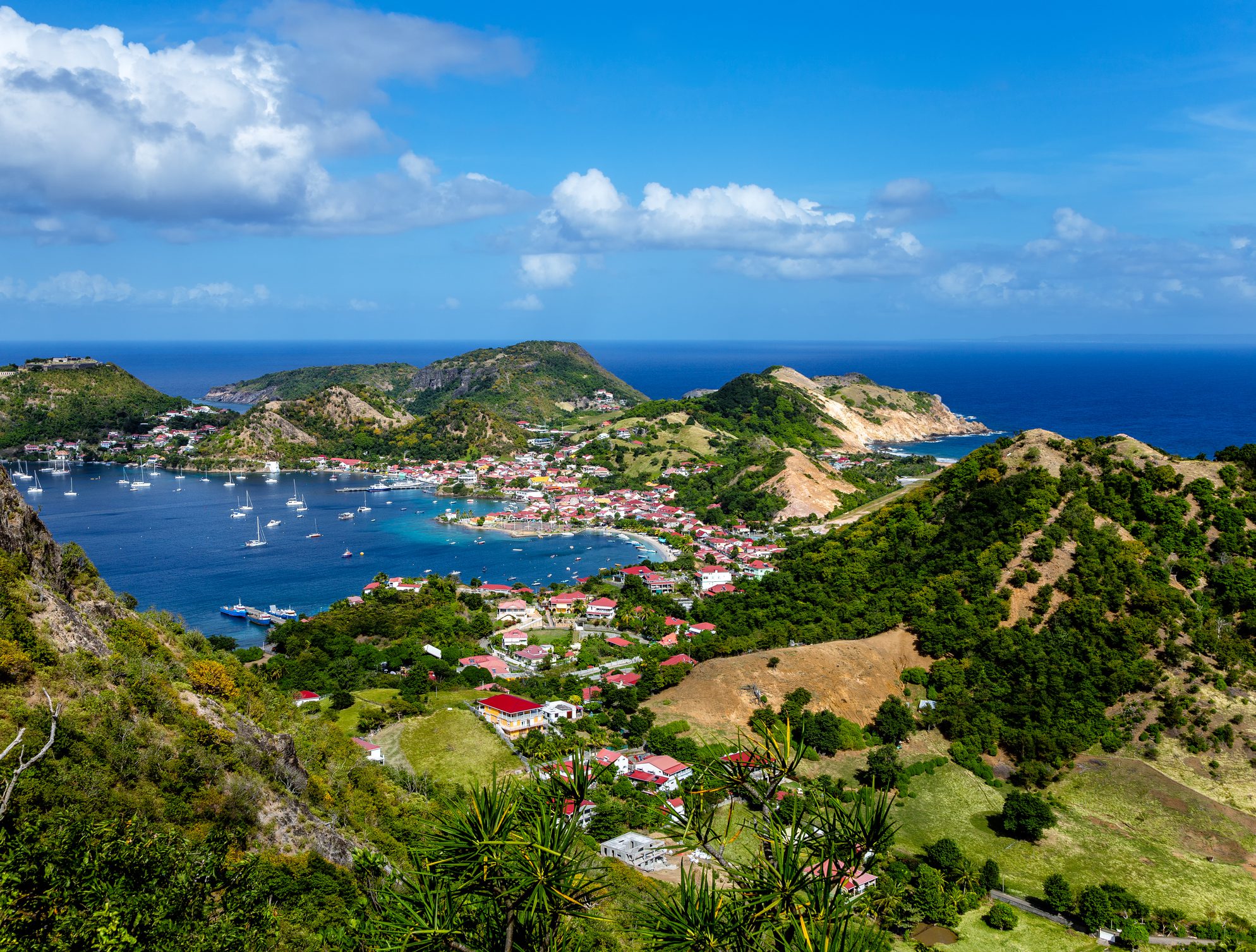
The Saintes are some of our favorite islands in the Eastern Caribbean. They have a distinct identity shaped by centuries of island life: fishing traditions, French language and culture, and Caribbean rhythms that are entirely their own. They are small, dry, and steep, with red and brown cliffs. Mountains include Le Chameau, the highest peak at over 1,000 feet, and white beaches abound. There are excellent French Creole restaurants, adventurous hiking, picturesque landscapes, and calm anchorages. After a hard day’s sail, they are bound to be love at first sight.
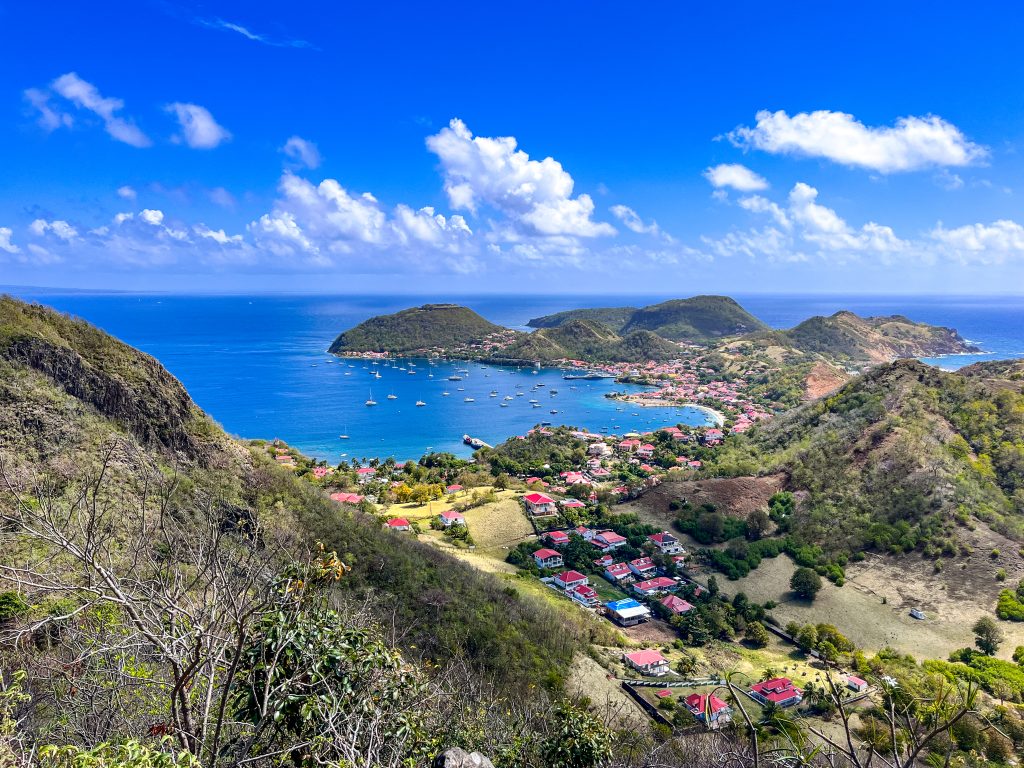
The only town, Bourg des Saintes, is on the largest island, Terre-de-Haut. The Saintes have been French since shortly after their colonization and have long supported a small community that once relied almost entirely on fishing. The islands were never major agricultural producers, so the plantation economy that shaped much of the Caribbean took a different form here. There is a strong link to the north of France, especially Brittany, and some years ago, you could see beautiful Breton-style fishing boats all along the waterfront. These islands have always been a predominantly Franco-Caribbean community, shaped by fishing and, increasingly, by tourism.
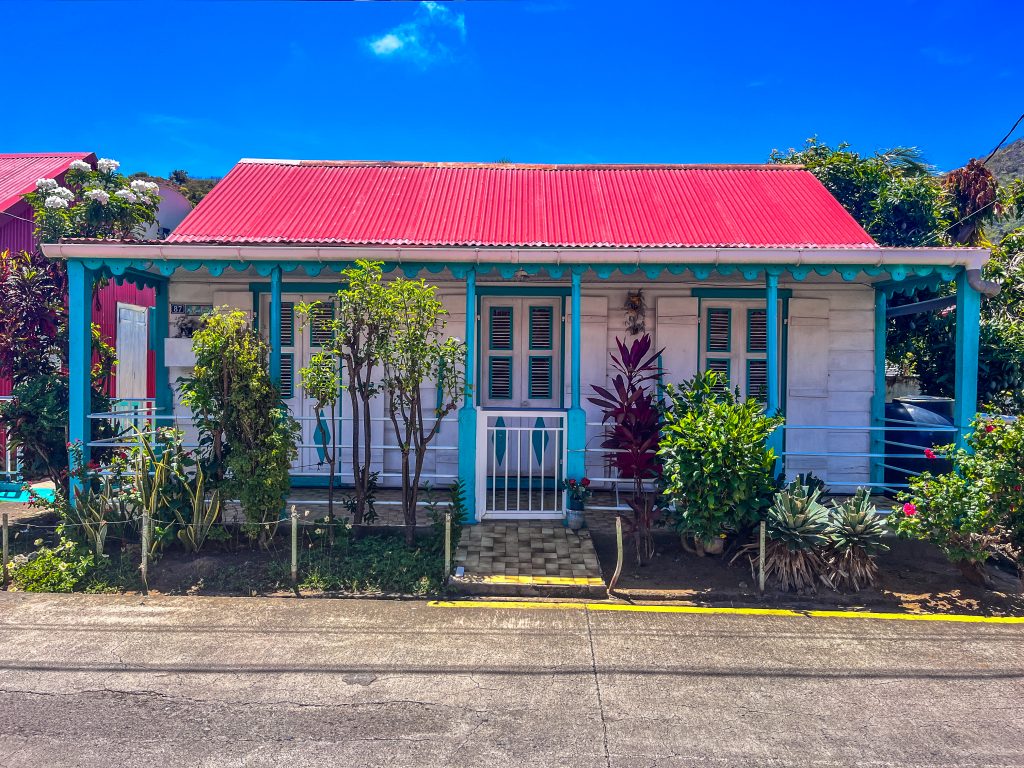
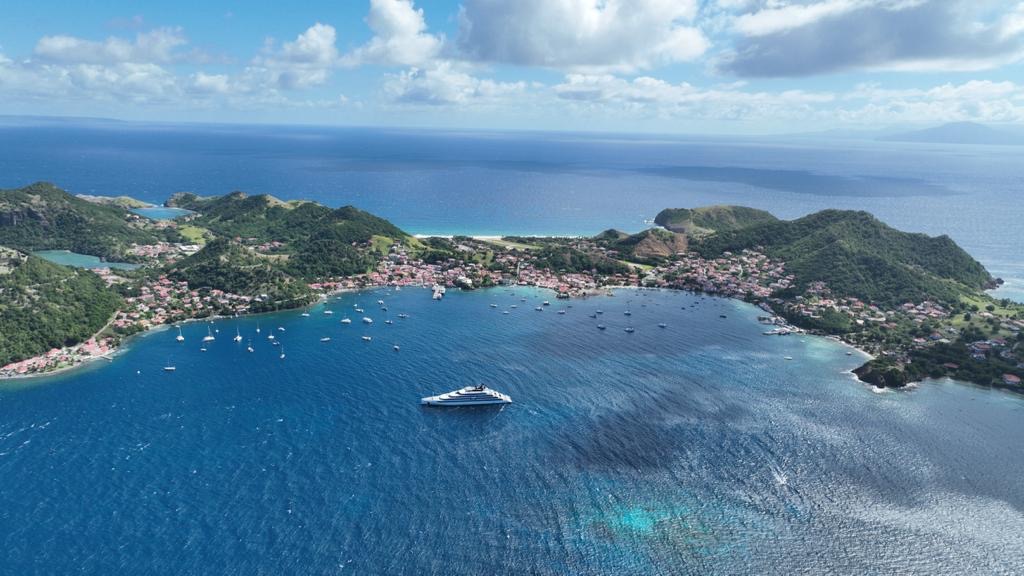
Bourg des Saintes is an adorable seaside town, sparkling clean and picturesque, with red roofs and a handful of those older Caribbean buildings that are all balconies and gingerbread. Flowers grow in abundance around the houses, and no one is in a hurry. Local boats are anchored all along the waterfront.
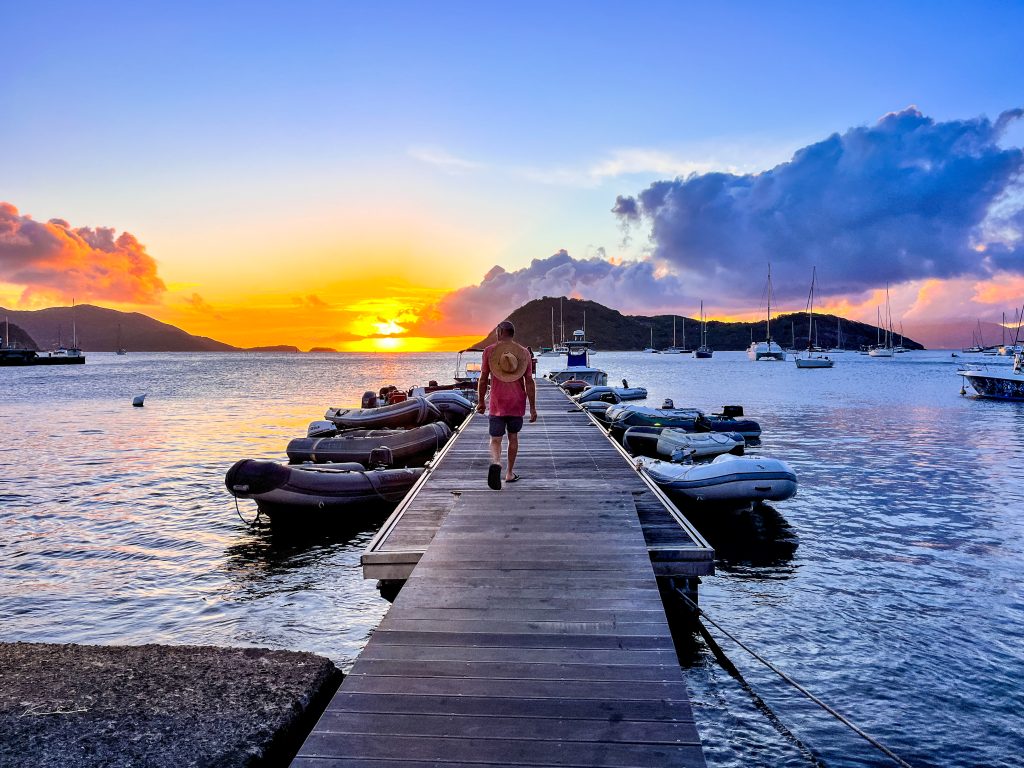
The local economy runs on tourism, so restaurants, accommodation, bike rentals, and shops line the waterfront and the streets behind it. Many ferries arrive each day from Pointe à Pitre, Guadeloupe, bringing an influx of day-trippers. The pace changes noticeably when the ferries are in, with a rush hour when they arrive at 0900 and another when they leave at 1700. If you prefer a quieter anchorage, Îlet à Cabrit or Terre-de-Bas are good alternatives.
Navigation Between Guadeloupe and the Saintes
The Saintes are about five miles from Guadeloupe at their nearest point. Sailing between Basse-Terre and the Saintes is a pleasant short passage, even if sometimes hard on the wind when heading south.
Sailing from the Saintes to Pointe à Pitre is usually a windward passage, especially before Pointe Capesterre. The trip from Pointe à Pitre to the Saintes is usually very pleasant.
The only complications between the Saintes and Pointe à Pitre are the various shoals from Sainte Marie toward the deep-water channel. The current can take you rapidly to the west, so it is easy to get taken down onto these shoals without realizing it. It is best to head well out and approach Gosier rather than trying to cut the corner. The following procedure should keep you clear both ways: When close to Sainte Marie, keep a gap between the Saintes and Pointe Capesterre. Farther toward Pointe à Pitre, let Terre-de-Bas go behind the headland, but keep a gap between Terre-de-Haut and Pointe Capesterre. The deepwater channel in and out of Pointe à Pitre is well marked, but there is plenty of water to shortcut over the bank to its east, except for one shoal called Muchoir Carré that is only nine feet deep and breaks in heavy swells. This shoal lies just east of the last beacon of the shipping channel. The beacon southeast of that one is black and yellow and east of the channel line. If you pass to the southeast of this beacon, you will stay in about 23 feet of water. If you decide to follow the main shipping beacons at night or in a rain squall, take care not to follow the fishing boat channel right up into Petit Bourg, as it starts soon after the main shipping channel ends.
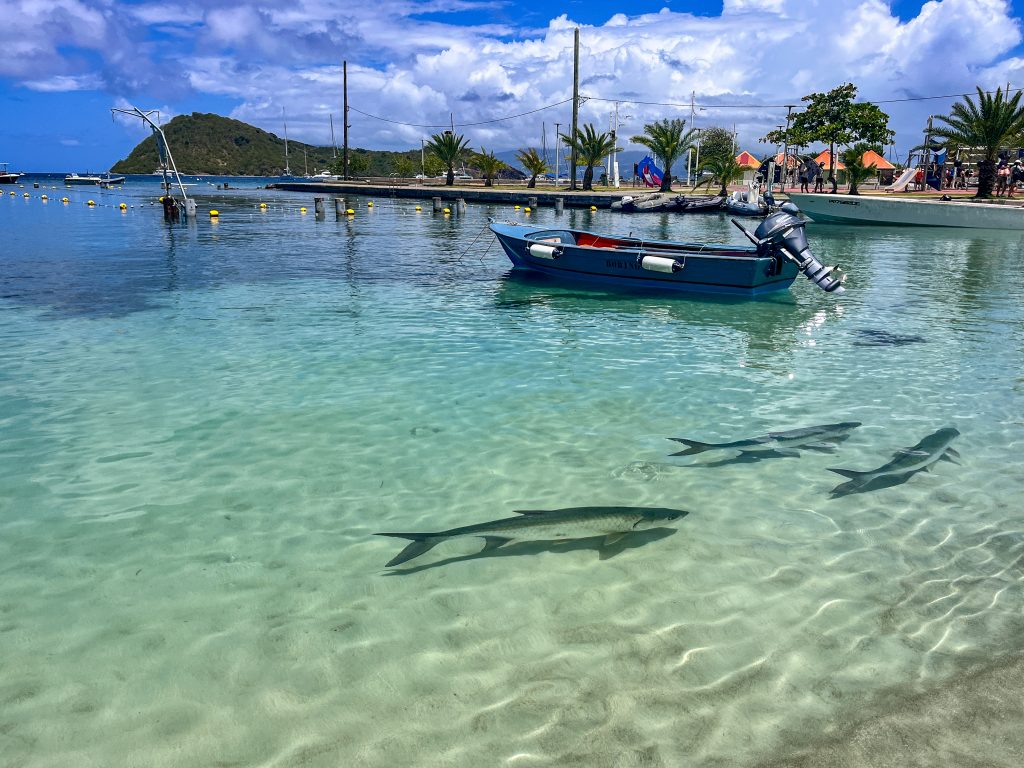
As you arrive at Îlet à Cochon, pass between the red and green beacons, leaving red right returning.
Chris Doyle visited the Saintes in two articles, “The Saintes and Their Moorings” and “Sailors’ Hikes,” the May 2013 issue of Compass (www.caribbeancompass.com/online/may13compass_online.pdf)
Doyle Guides contain the Eastern Caribbean’s most comprehensive and reliable sailing information, available in hard copy and online through a free mobile app, website, and Facebook group. (www.doyleguides.com)

Entry and Exit Procedures by Noonsite
Advance Paperwork
Customs and Immigration clearance in the French Antilles can be completed online. The Noonsite French Antilles Clearance Guide explains the process. For visitors from many countries, a visa is not required.
Entry Process
Yachts that complete online clearance are free to explore Guadeloupe, with no further steps required. For yachts unable to complete formalities online, in person clearance remains available at approved clearance computers.
Ports of Entry
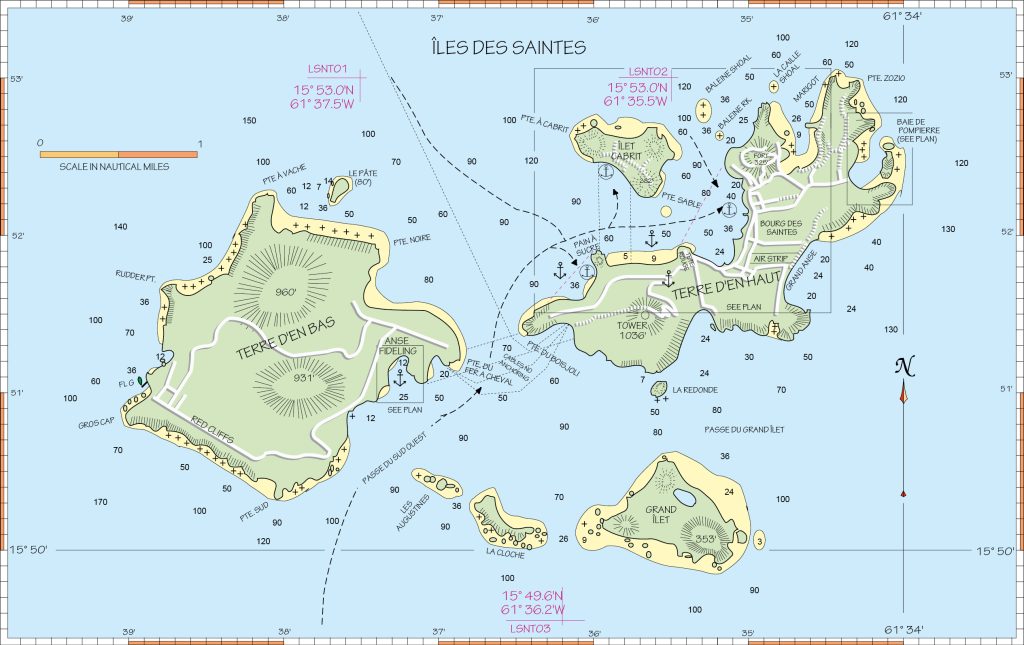
The approved clearance computers for Le Saintes are in ISM Les Saintes Multiservices, Terre de Haut. Full details on Guadeloupe Ports of Entry , can be found via the blue “Explore Country” button and select “Main Ports” or Noonsite members can access the Noonsite: Ports of Entry Map.
Exit Process
The same options as entry apply. Yachts requiring a departure stamp should plan to visit an office with approved clearance computers for endorsement. All Departments of France (St. Martin, St. Barts, Guadeloupe, and Martinique) require yachts to clear out of one, before sailing to another.
Rates
There are no Customs and Immigration fees. There is a small admin fee (around 5 Euros) for use of approved clearance computers.
Check Noonsite: Guadeloupe for more detailed information and updates. This information is provided by Noonsite.com, specialists in worldwide formalities for yachts, and was accurate at press time.


