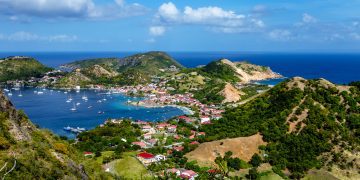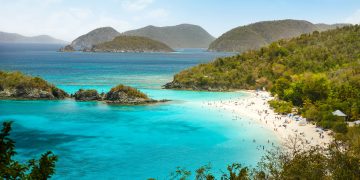





Story and photos by Lexi Fisher & Chris Doyle
Tobago is a little out of the mainstream of the other Caribbean Islands. Too far to sail in a day and too often a struggle against wind and current, it is less popular than the islands to the north. However, for the adventurous sailor, the extra effort required is amply rewarded by a visit to one of the least commercialized islands in the region.
This small (116 square miles) mountainous island has lovely beaches and green hills. With a population of only 60,000, it has a relaxed, unhurried pace. Long used as a holiday destination for Trinidadians, Tobago has a low-key but growing tourism industry. Fishing is important, and much of the catch comes from seine netting. When anchoring in Tobago, you need to consider the needs of the fishermen.

Tobago has changed hands more times than any other Caribbean island, between Dutch, English, Courlanders, and French; the count is sometimes 24 times, sometimes as high as 31 times. This figure is vague because, for many years, no country had a firm grip on Tobago, and changes in administration were hardly noticeable. The island had long been home to the Kalinago people, who successfully resisted permanent colonial settlement for over 150 years after Columbus sighted the island in 1498. A Dutch attempt to establish a settlement in 1628 ended through a combination of Kalinago resistance and disease. Later, colonists of various nationalities periodically laid waste to each other’s settlements, which disrupted the pirates operating in the area. The Duke of Courland (now part of Latvia) was very persistent in trying to exercise sovereignty over the island, which had been given to him as a birthday present by King Charles I of England, throughout the 1640s.

By the early 1700s, plantation culture had begun, and English colonists were using enslaved people to grow and harvest various crops, including sugar cane, cotton, and indigo. In 1781, the French took the island over for 12 years and made serious attempts to develop Tobago’s economy, continuing to rely on the labor of enslaved people to grow sugar and cotton. After the British regained control in 1793, Tobago was incorporated into the colony of Trinidad in 1899, following a severe hurricane and the collapse of the plantation economy. The British remained in power with only a slight interruption until Trinidad and Tobago became an independent country in 1962.
Today, tourism is an important industry, but even so, Tobago is not what you would call a touristy island. There are not many international chain stores, and with the exception of a couple of major hotels, even the businesses that cater to visitors tend to be independent and individualistic, and are part of what makes Tobago feel distinct from more heavily touristed islands.
What the island lacks in commercial development, it makes up for in bureaucracy. Customs in Tobago are different from other islands inasmuch as they need to know your movements while there, and the two ports of entry, Charlotteville to the north and Scarborough to the south, each have jurisdiction over their half of the island. You must inform the relevant office if you would like to visit any bays other than the port of clearance, and they will issue you a “Bay Hopping” permit. You must also inform the relevant office before moving between jurisdictions, and then visit the next port of entry before visiting any other bays within their jurisdiction.

Additionally, while Trinidad and Tobago are one country, if you are going from one to the other, you must visit customs and immigration both before you leave and when you arrive.
Trinidad and Tobago are currently trialing SailClear, which was scheduled to go live in June 2026. It is unclear whether it will be accepted in Tobago, or how it will affect the current procedures (hopefully, it will ease some of the bureaucracy rather than add to it).
There are no fuel docks or convenient ways to fill your water tanks in Tobago. Both will require lugging jerry jugs from wherever the closest gas station or standpipe is. Dinghy docks are scarce, as most of the docks on the island are high concrete ones designed for fishing pirogues. But, with a little effort, Tobago is a charming place to settle for a few days or weeks before your annual haulout in Trinidad. Some even skip the haulout and spend the whole hurricane season here.
Doyle Guides contain the Eastern Caribbean’s most comprehensive and reliable sailing information, available in hard copy and online through a free mobile app, website, and Facebook group. (www.doyleguides.com).

Trinidad & Tobago Entry and Exit Procedures by Noonsite.com
Ports of Entry (POE)

While Trinidad only has the one port of entry – Chaguaramas – Tobago has two: Scarborough in the south and Charlotteville in the north.
Advance Paperwork
If sailing from Trinidad to Tobago, be sure to check out with the authorities in Chaguaramas for authorization to sail to Tobago. Yachts arriving from an international destination can file a float plan to notify authorities of their pending arrival.
Advance visas are not generally necessary as most crew will be granted a 3-month visa-waiver on arrival.
An import permit needs to be arranged in advance for any pets on board.
Entry Process
All crew clear in with Port Health, Customs & Immigration upon arrival. Expect more paperwork than in other Caribbean islands, though Trinidad & Tobago are moving toward using SailClear. Checking in and out of each port is necessary when cruising domestically. Within Tobago, “Bay Hopping” permission must be granted.
Exit Process
Clear-out with Customs, Immigration and the Port Authority. When sailing to Trinidad from Tobago, special authorization is needed from the authorities. If departing for Grenada, it is recommended to file a passage plan with the Coast Guard.
Rates
Arrival fees include Immigration and Port Authority charges. Departure fees include a departure tax (if more than 2 crew on board) and navigation fees (based on time spent in country). Overtime fees are payable outside of normal operating hours.

Approximate clearance costs for a double-handed yacht staying up to 30 days (excluding overtime charges) is TT$900 (US$133). All fees are paid in cash (local TT$).Check Trinidad & Tobago on Noonsite for more detailed information and updates (free log-in required). This information is provided by Noonsite.com, specialists in worldwide formalities for yachts, and was accurate at press time.