




By Waterway Guide Staff
The islands of The Bahamas are high on many cruisers’ bucket lists and deservedly so. But visiting this nation of islands and cays (pronounced “keys”) requires a little more work than domestic destinations. First, The Bahamas covers an enormous sea area. Within the country are many distinctly different cruising destinations, each requiring some research and planning.
Many boaters enjoy leaving South Florida and cruising the Abacos first. You can then return home after a few days or weeks, or you can travel farther south by way of Eleuthera, the Exumas and beyond. The “Bahamas Loop” is a loosely defined route that takes you through the Abacos, Eleuthera, the Exumas and back to Florida via Bimini. Still others choose to only visit the Exumas. The choice is yours. The only sure thing is that you can spend years exploring the islands and still have plenty to see.
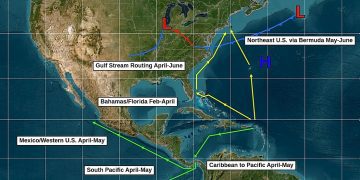
Once you’ve decided where you want to go, you’ll need to sit down and look very carefully at how to get there. All trips from the U.S. to The Bahamas and back require two open-water passages across the Gulf Stream, one of the single most powerful forces on earth. On the day of your crossing, the Gulf Stream can be like a millpond or it can be a raging maelstrom. We recommend you embark on a day when it’s like a millpond. Researching the weather and knowing when to go, when to stay and when to wave off is essential.
The following is a list of things you will need before crossing the Gulf Stream and starting your island adventure.
- Have current passports for everyone aboard. Check that they aren’t going to expire during your trip. (We suggest six months before expiry but any date beyond your cruising permit expiry is acceptable.)
- Keep current vessel documentation or state registration on board (and check the expiration date).
- Make sure to have insurance for your vessel, including coverage for the appropriate cruising area. Note that many U.S. policies do not cover The Bahamas without an additional binder.
- Have medical insurance for yourselves. U.S. insurance varies significantly depending on the provider, so you may need to acquire supplemental international coverage.
- Get emergency medical evacuation insurance (e.g., DAN Boater).
- Speak to your doctor about a long-term refill for the length of your trip for prescription medications.
- Contact your bank and let them know your international travel plans to avoid automatic fraud declines. Double-check your bank and credit cards to find out what sort of fees they might charge on international transactions.
- If you are traveling with a pet, apply for an import permit, receive the paperwork and then visit a vet before departing the U.S. The process can take a while so start early.
- Stock up on cash. ATMs are few and far between in the Out Islands (but most marinas and fuel docks do take Visa or MasterCard). A credit card fee is charged by most businesses.
- Make a plan for getting cellular service and internet access while in the islands. If using your existing number and account, make sure your phone is compatible with the BTC network and check your international roaming rates.
- Carry current paper and electronic charts.
- If you don’t already have it, consider downloading a tablet or smartphone GPS charting app to use as a backup to your onboard chart plotter. Try to get an app with a different brand of chart so that you can compare differences.
- Purchase a yellow “Q” flag as well as a Bahamian courtesy flag.
- Stock up your pantry and freezer.
- Make sure your boat maintenance is up to date. In particular, make sure your batteries, bilge pumps and engine are in top-notch order.
- Get as many spare parts as you can afford and store. At a minimum, have on hand oil and coolant, several filters (every kind), impellers and belts. Take more fuel filters than you think you’ll need. Consider things like a spare starter, alternator, exhaust elbows and gasket sets, depending on the age and condition of your motor. If it might break, take it with you! Don’t limit spare parts to the engine. Take a spare water pump, bilge pump, light bulbs, fuses, circuit breakers, toilet parts, etc.
- Brush up on your navigation skills and read everything you can about boating in the islands.
- Ensure your vessel’s ground tackle is appropriate for the islands.
- Check those bilge pumps one more time to make sure they’re working!

This is an excerpt from Waterway Guide Bahamas edition, the indispensable cruising companion for boaters exploring the Bahamas Islands and the Turks and Caicos Islands. Find marinas, anchorages and trip planning tools for The Bahamas with Waterway Guide Explorer (waterwayguide.com).