




ANTIGUA & BARBUDA — AnuBlue has marked its most successful year of coral restoration since its establishment in 2021, planting more than 5,800 nursery-grown corals across reefs around Antigua.
The work represents approximately 2.3 acres of restored reef — nearly the equivalent of two American football fields.
AnuBlue reports an 84% survival rate among corals planted at its restoration sites, a milestone that reflects both the growing scale of the program and the continued success of its approach to rebuilding coral populations.
As wild coral populations decline worldwide, active restoration has become an increasingly important strategy for protecting existing coral populations and helping degraded reefs recover. By growing and planting thousands of corals, AnuBlue aims to strengthen the long-term future of reefs throughout Antigua and Barbuda.


Photo credit: Andre Phillip
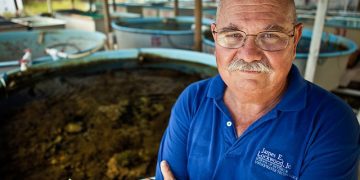
The organization operates Antigua and Barbuda’s largest active coral restoration program, with four coral nurseries and five restoration sites across Cades Reef and the North East Marine Management Area (NEMMA), two important reef areas supporting marine life and coastal communities.
From these sites, AnuBlue grows and plants corals across multiple reefs around Antigua, allowing restoration work to take place on a meaningful scale.
Behind every coral planted is a diverse team of marine scientists, fishermen, divers, and volunteers, all working toward a shared goal of protecting and restoring Antigua and Barbuda’s marine environment.
Successful restoration, however, involves more than simply increasing the number of corals on a reef.
AnuBlue’s restoration program is designed around both resilience and biodiversity. Coral fragments are selected from parent colonies already demonstrating an ability to withstand environmental pressures such as rising ocean temperatures and disease.
Different genetic individuals of the same species are then planted near one another, increasing opportunities for natural reproduction and helping create larger, more genetically diverse coral populations.
The program currently grows 15 reef-building coral species, including five species classified as critically endangered. Each plays an important role in maintaining the reef ecosystem’s structure and health.
By combining resilient coral genetics with broad species diversity, AnuBlue is working to create healthier, stronger reefs better equipped to withstand future environmental pressures.
Through continued restoration, monitoring and research, the organization aims to rebuild reefs capable of supporting marine life, protecting coastlines and remaining an important part of Antigua and Barbuda’s natural heritage for generations to come.


Photo credit: Andre Phillip
About AnuBlue
AnuBlue, formerly Elkhorn Marine Conservancy, is a nonprofit organization dedicated to strengthening the resilience and stewardship of Antigua and Barbuda’s marine ecosystems through restoration, research and community engagement.
For more information, visit www.anublue.org.