



Story and photos by Ian Stalker
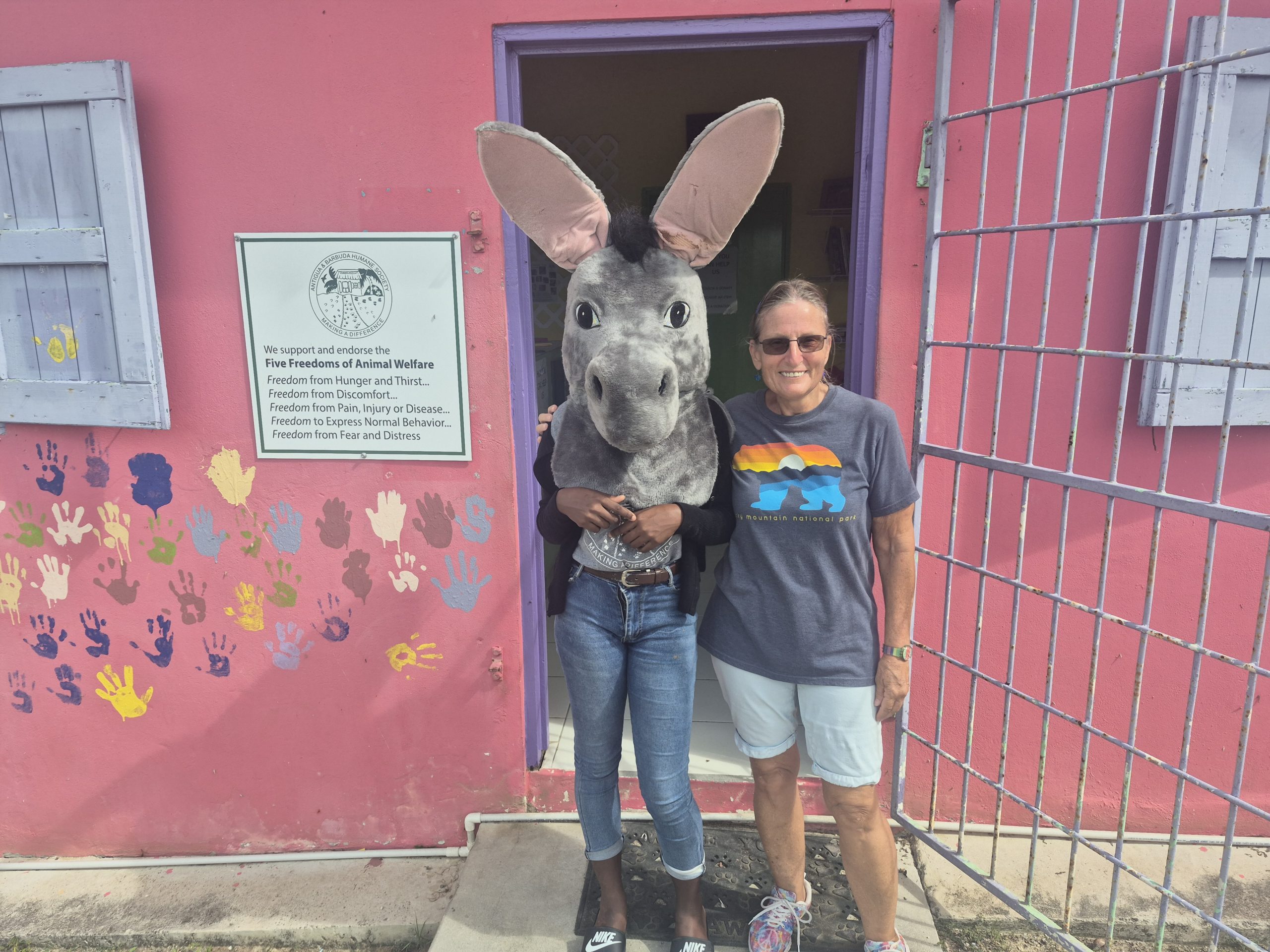
Antigua’s Donkey Sanctuary, part of the Antigua & Barbuda Humane Society, was created in the early 1990s, after recognition that there was a donkey overpopulation problem, and that early solutions — shipping them off the island — were unsatisfactory and often inhumane.
Sanctuary volunteer Cheri Benjamin says donkeys have long been found on Antigua. They were originally used to work in sugar cane fields, and crop farmers used them to carry their produce to market. However, the introduction of motorized agricultural transportation and a shift from agriculture to tourism in the late 1960s and early 1970s led to an increase in the number of donkeys left to roam on their own in search of food and water, a development that put themselves and motorists at risk. They came to be viewed as pests by farmers who had to deal with the creatures feeding on their crops.
Some Antigua donkeys are still used to carry fruit or are ridden by locals but most of Antigua’s donkeys are now feral and can sometimes be spotted grazing alongside roads.
“Nobody thinks about them until they become a problem,” Benjamin says, adding donkeys can be road hazards at night and she also understands why Antigua residents who grow food become frustrated when they find donkeys eating what they’re cultivating.
The solution was a 35-acre sanctuary on land allocated by the government, a fenced-off area for the exclusive use of donkeys. The sanctuary has a mobile corral with food placed in it to attract donkeys, with a gate automatically closing after they enter, safely trapping them. A “donkey trailer” provided by the Britain-based International Donkey Protection Trust is then used to bring them to the sanctuary.
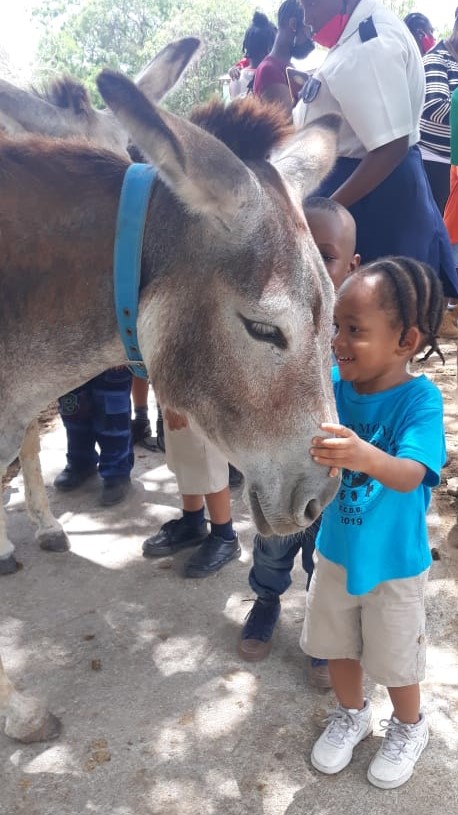
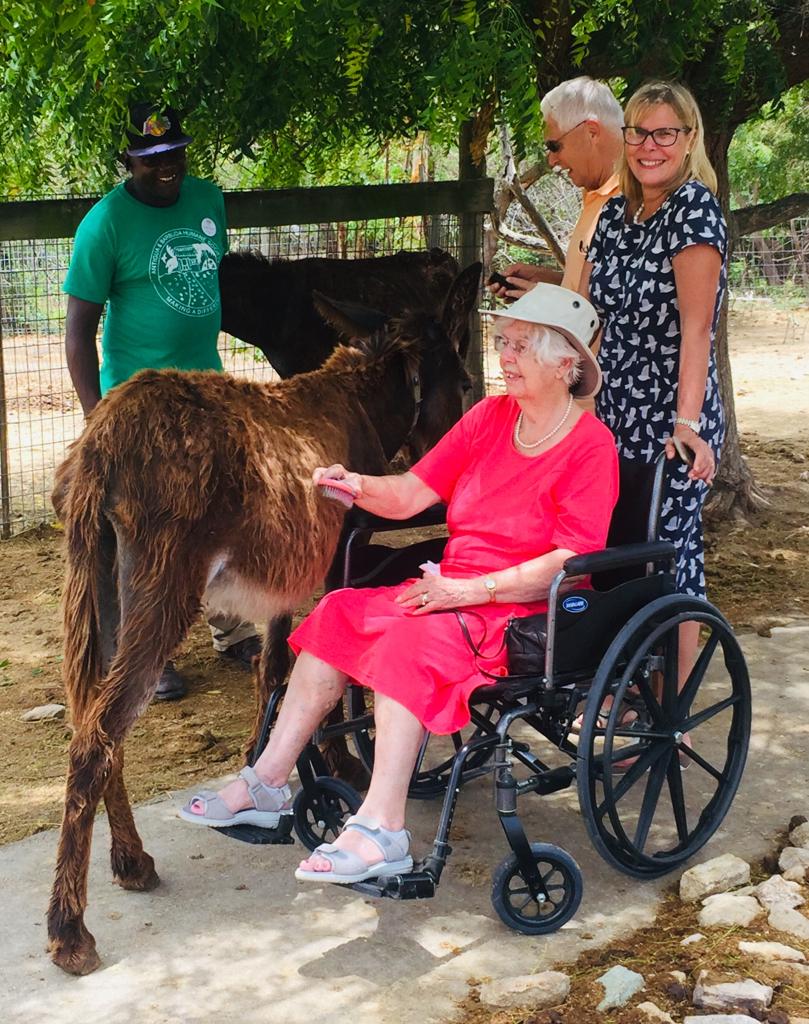
The sanctuary now is home to about 100 donkeys, some of which were domesticated but whose owners later decided they couldn’t look after them. Those friendly donkeys are kept in a corral where visitors are welcome to pet and brush them, with the mammals that Benjamin describes as affectionate appreciating that kind of attention.
“They are companion animals and truly do have an interest in humans. They enjoy being spoken to and petted and sometimes jostle each other to be the one getting the visitor’s attention,” adds Karen Corbin, humane society president.
Those kept in the petting corral also share their living quarters with some tortoises native to Antigua.
Feral donkeys, on the other hand, are wary of people and are corralled away from guest visitors.
Sanctuary workers reach out to Antiguans, including conducting school visits so children will learn to appreciate their equine neighbors at an early age.
But Benjamin says she understands why some Antigua residents view the animals as an annoyance and realizes why they should be isolated.
“In my mind it’s nice to see a donkey roaming free but I also understand they can be seen as a nuisance,” she says. “It would be nice if they could all be brought here (to the sanctuary) and have a good life.”
Male donkeys are immediately neutered when arriving at the sanctuary, a procedure done by a government veterinarian as part of an agreement between the government and the humane society. The surgery takes place in a clean, air- conditioned facility recently constructed thanks to grants and various donors. The animals receive other veterinary treatments upon arrival, including being treated for parasites.
Ongoing treatments can include hoof treatments and teeth trimming, with donkey teeth experience non-stop growth. Failure to float (trim) the teeth regularly can result in a donkey biting into its own jaw, making eating virtually impossible. Each donkey is also collared, enabling sanctuary staff to monitor its health.
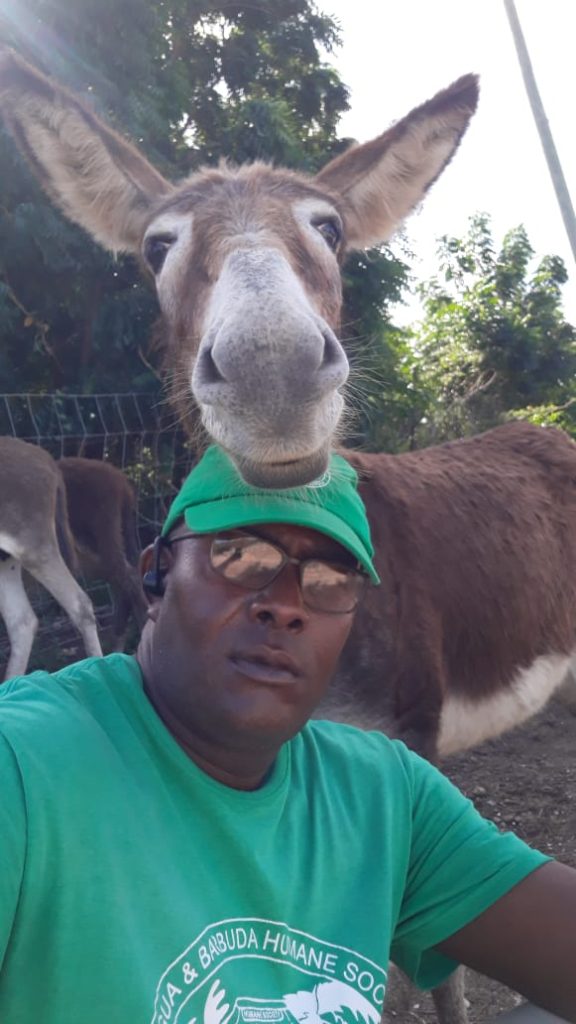
The donkeys also receive nutritious food and food quantities are carefully regulated, with Benjamin reporting that feral donkeys are prone to overeating, which can lead to health issues.
It costs about US$350 to care for a donkey over the course of a year, with the sanctuary relying on donations, sales from its gift shop and other sources to care for the creatures. An adopt-a-donkey program provides an adoption certificate and a bi-monthly newsletter to those who make a donation, with Corbin reporting that some tourists who adopt visit their adoptee on return Antigua trips and other visitors will adopt more than one.
The sanctuary is open without charge Tuesday through Saturday 10 to 3 for visitors. It also has a small studio apartment overseas volunteers can stay in for free in return for helping.
The sanctuary also received support from the late Sir Robert Barrett, a prominent figure in Antigua’s hotel trade, who in his last days asked staff to make sure the sanctuary received support.
Meanwhile, Benjamin says there’s no doubt that donkeys who end up at the shelter will have good care for the remainder of their lives.
“When they come here, they’re going to get nothing but love,” she promises.