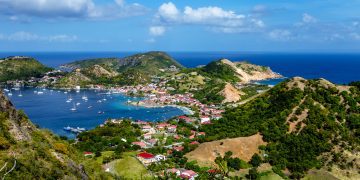




Story and photos by Lexi Fisher & Chris Doyle
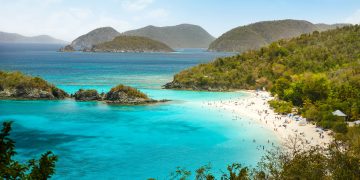
Low-lying Anguilla is home to some of the most spectacular white-sand beaches in the Caribbean, and along the sweeping crescents and shallow bays of luminescent blue water, there are so many excellent restaurants with breathtaking views that choosing one can be a challenge.

The tourist boom has brought with it a rash of building, with styles varying from rectangular concrete boxes to the elaborately grandiose in many flavors. Here and there, but getting rarer, you come across a traditional old Anguillan house; they stand out for their simplicity and elegance.
In 1967, Britain lumped Anguilla with St. Kitts and Nevis and made them an autonomous state. This was convenient for the British Colonial Office, but Anguillans were dead set against it and wanted to remain with England. They rebelled against St. Kitts, with an amazing armed rebellion in which there were only minor casualties and no fatalities. Then Anguillan rebels decided to take the offensive and invade St. Kitts with a small boatload of men. The invasion was a complete fiasco, but after the ineffectual shooting died down, no one in St. Kitts really wanted to mess with the Anguillans. In 1969, Britain belatedly decided to take a hand, and invaded. Armed men waded ashore onto the beaches to be met by goats and curious small boys. After the embarrassment died down, Anguillans got what they wanted and are again administered by the British.

Road Bay, the main anchorage, is a charming village set on a lovely beach. The sail to and from St. Martin is usually a pleasant haul over turquoise water. From Road Bay you can visit other anchorages along Anguilla’s south and north coasts, as well as making day stops offshore at Sandy Island, Dog Island, and Prickly Pear Cays. Most of Anguilla is part of a marine protected area, and there are hefty fees involved for visiting it. The bright side is that the fees deter many people, so you’re more likely to have anchorages to yourself. If you decide to stay in Road Bay, which is not part of the MPA, the fees for visiting are some of the lowest in the region.
Clear into Anguilla at Road Bay. From there you can get a cruising permit to explore the MPA. If you use a yacht agent and arrange it in advance, the agent can check you in from any anchorage.

The Anguilla Sailing Association runs the annual Anguilla Regatta (second weekend in May). They also organize the Anguilla Youth Sailing Club, which teaches local kids to sail.
When sailing from St. Martin, Anguilla appears low and uniform. Toward the western end there are some very white ultramodern buildings that almost glow in the sunlight behind Shoal Bay. Hideous or inspired, depending on your taste. Behind Maunday’s Bay and at the headland linking it to Cove Bay are some white buildings of distinctively Arabesque architecture. The next serious large group of houses is in the area of Blowing Point. However, new buildings are appearing all the time.
The shoreline from Rendezvous Bay around Anguillita to Road Bay is fairly free of shoals, and you can sail just a couple of hundred yards off the coast. Offshore, you will see the large, flat six-foot-high Blowing Rocks. You can sail either side of these, but do not approach too closely.
When passing the western tip of Anguilla, always go outside Anguillita; the water between Anguillita and Anguilla contains underwater rocks. Pass outside South Wager. Between Sandy Island and Anguilla there is a mile of clear water to sail in, but avoid the five-foot patch that lies a few hundred yards to the south of Sandy Island. This is normally easy to see as light green water.
Between Anguillita and Road Bay, anchoring is sometimes possible in Meads Bay and Barnes Bay. You must normally clear before visiting these bays, though captains using yacht agents can come directly here and arrange pretty much anything.
Doyle Guides contains the Eastern Caribbean’s most comprehensive and reliable sailing guide content, available in hard copy and online through a free mobile app, website, and Facebook group. (www.doyleguides.com).


Anguilla Entry and Exit Procedures from Noonsite
Ports of Entry:
Yachts must proceed directly to Road Bay [https://www.noonsite.com/place/anguilla/road-bay/] and clear in at the Customs and Immigration office at Sandy Ground. This is quick and straightforward.
Advance Paperwork:
Current reports are that the SailClear advance web notification service for clearance is not operational here.
Entry Process:
Customs and Immigration inward clearance must be completed by the captain; the offices are conveniently close by the dinghy dock in Road Bay.
There are a number of nationalities who do not require a visa and will likely be granted a stay of up to three months. E-visas (if required) can be secured for visits of less than 90 days.
if wishing to sail anywhere outside of Road Bay, a cruising permit is necessary (this includes leaving Road Bay in just your dinghy). Costs for the permit are high and cover only daily mooring/anchoring. Overnight mooring outside Road Bay is not permitted.
Exit Process:
If staying less than 24 hours, one can clear in and out with Customs at the same time. There is a US$3 departure tax per crew member.
There should only be harbor fees to pay. If a cruising permit is required, costs are high — for example vessels up to five tons — US$110 per day. There are also diving fees.
This information is provided by Noonsite.com, specialists in worldwide formalities for yachts, and was accurate at press time. Check https://www.noonsite.com/place/anguilla/view/clearance for more details and updates.