Editor’s note: Photos, captions and introduction are from The Old House, a book edited by Jenn Yerkes and Mark Yokoyama, and published in a bilingual (English and French) edition by Les Fruits de Mer, a non-profit French association based in Grand Case, Saint Martin. The mission is “to promote awareness of ecology, culture and sport through discovery, inspiration, and education.” The book can be downloaded from the website as a pdf (www.lesfruitsdemer.com/wp-content/uploads/2023/03/The-Old-House.pdf), or purchased in book form as a beautiful addition to your Caribbean history library.
Introduction
The Old House is an important piece of the heritage of the island of St. Martin. The history of the site goes back over 250 years. The story of The Old House follows the story of St. Martin in many ways. It is a place where tobacco was grown, then sugarcane, and then salt was harvested from the pond behind it.
The Old House has been home to many people with names that are familiar on St. Martin: Hodge, Doncker, Fleming, Richardson, Romney and Beauperthuy. The property was built, maintained, and farmed by many dozens of enslaved persons during its first 100 years. We don’t know their names, but descendants of these ancestors live here on the island today.
Today, The Old House is not only a place of history, but also a place where all can go to learn about St. Martin.
Here are a few of the images from this fascinating glimpse of Caribbean history.
The Old House is designed with windows and doors across from each other, so wind can blow through the house. This design can have ten times the air flow compared to a window on only one side. The windows are at human height so people can enjoy the cooling breeze.The Old House was built with a massive stone foundation. This keeps the floor dry and protected in storms or floods. It also keeps the house cool. The foundation acts as a thermal mass, absorbing the heat from the house.mystery machine. Over the years, a tree had grown up through it. Until very recently, people on St. Martin had to make many of the things they used in their daily life, from nails to clothing. Skilled craftspersons operated machines like this every day.The Old House has been part of the St. Martin landscape for hundreds of years. The first known record of it is from 1766. The foundations of the house are from this era. In the census of 1772, it was the most valuable estate on the French side. Crops included 2,000 coffee plants, 1,000 banana trees and acres of cotton, potatoes, and cassava. The names of the 49 enslaved people who lived there at the time are unknown, but traces of their lives can still be seen on the site today. They cleared and farmed the land, tended the livestock, constructed stone walls, and built the foundations of the house.By the late 1830s, the property was in decline … In 1843, it was acquired by Daniel Beauperthuy. By 1931, the wooden upper part of the house was again in disrepair. Unable to tear down the strong posts, “Lil Dan” Beauperthuy set the house on fire. He said it burned for about two weeks. The concrete house you see today was built in 1935 by Adolph Artsen on the original foundation. It remained the residence of the Beauperthuy family for many years. Pierre Beauperthuy transformed the property into a museum of history and culture in the year 2000. His charisma and gift for storytelling were key parts of the museum he created there. It was a monument to his love of the island of St. Martin and its history.By 1793, much of the land was used to grow sugar cane. A mill had been built in the valley across the street from The Old House. Facilities were made to refine sugar and produce vinegar and rum. By 1816, there were 77 enslaved people on the estate, producing sugar while also raising their own food. Rollers were used to crush cane, and the juice was reduced in giant boiling coppers. The remains of the sugar mill are in the valley across the street from The Old House.Windows were made with louvers, slats of wood that can be tilted. These allowed air to pass, while still providing shade. People in the house could change the angle of the louvers to direct the incoming breeze where they wanted it.
By Janine Mendes-Franco Editor’s note: This story is part of Global Voices 2026 Spotlight series, “Global Crisis, Local Solutions,” which offers stories of resistance and successful climate action,...
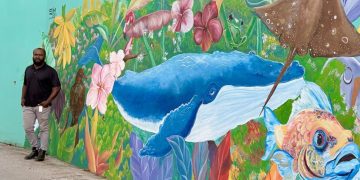
Story and photos by Claudia Colli When I stepped through the door at Creative Waves, I entered a world brimming with color and vitality. A self-described “arts hub,”...
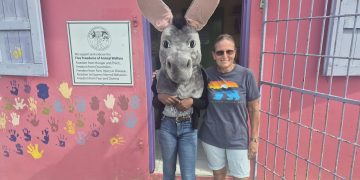
Story and photos by Ian Stalker Antigua’s Donkey Sanctuary, part of the Antigua & Barbuda Humane Society, was created in the early 1990s, after recognition that there was...
Partner Content As the boating season approaches, a familiar energy begins to return to Virgin Gorda Yacht Harbour. After a summer of haul-outs, maintenance, and a little well-deserved...
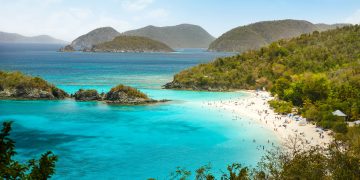
Beach.com, the online travel guide known for its data-driven beach rankings, has chosen the U.S. Virgin Islands’ Trunk Bay as Number One on its list of the world’s...