




Story and photos by Lexi Fisher & Chris Doyle
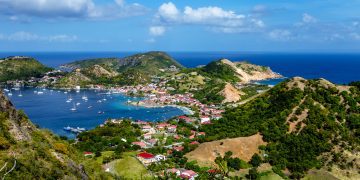
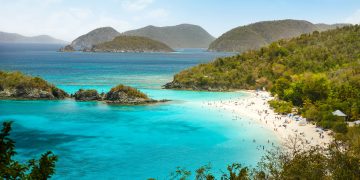
Anguilla sits at the northernmost range of our Cruising Guide series, at the top of the Northern Leewards chain, just above St. Martin/St. Maarten, a low island surrounded by soft, powdery, white sand beaches and banks of coral. It is visually stunning, in no small part due to the extensive marine protected areas that encompass most of the coastline and offshore islands. The fees for being in the MPA are some of the highest in the Eastern Caribbean, but that means that they are some of the least busy and offer unparalleled serenity.

For the most part, Anguilla has a wonderful sense of peace, and Anguillans are known for their strong community ties and welcoming attitude toward visitors. The population of 15,000 relies on tourism as the major industry, and the American University of Anguilla School of Medicine adds a rotating community of international students to the island’s population.
The tourist boom has brought with it a rash of building, with styles varying from rectangular concrete boxes to the elaborately grandiose in many flavors. Here and there, but getting rarer, you come across a traditional old Anguillan house; they stand out as very pleasing to the eye in their simplicity and elegance.
The two main visitor activities in Anguilla are going to the beach and dining out. As a consequence, there are so many excellent restaurants that mentioning them all would take an entire book; I have stuck to those close to the anchorages.

In 1967, Britain grouped Anguilla with St. Kitts and Nevis into an autonomous state. This decision, made without meaningful Anguillan input, disregarded both the geographic separation of the islands and the distinct identity of their people. Anguillans were dead set against it and wanted to remain with England. They rebelled against the rule of St. Kitts’ Premiere Bradshaw, who told them he “would show them who was boss” and threatened to “turn Anguilla into a desert.”
A remarkable and largely non-lethal resistance followed. The Anguillan rebels would open fire on the police station — manned from St. Kitts — at all hours of the night or day until the police were quite unnerved. A large armed crowd gave the police an ultimatum to leave the island and blocked the runway to stop reinforcements from arriving.
Next, the Anguillans, fearing an armed invasion from St. Kitts, decided to take the offensive and invade St. Kitts themselves. A small boatload of men went there, aided by two American mercenaries. The invasion was a complete fiasco. A big hole got blown in the ground near the defense force headquarters and there was a shoot-out at a police station. There were no casualties. However, after that no one in St. Kitts really wanted to mess with the Anguillans.
Several Americans thought up fancy schemes to help the Anguillans finance their island, and Britain, citing unfounded fears, including a widely mocked claim that organized crime had taken over the island, sent in troops in 1969. They were met not by the insurrection they expected but by goats and curious children; an episode that became emblematic of how thoroughly Anguillans had outmaneuvered the colonial bureaucracy. After the embarrassment died down, Anguilla separated from the St. Kitts-Nevis state and became a British Overseas Territory, which remains in place today.

Road Bay, the main anchorage in Anguilla, is a charming village set on a lovely beach. The sail to and from St. Martin is usually a pleasant haul over turquoise water. From Road Bay you can visit other anchorages along Anguilla’s south and north coasts, as well as making day stops offshore at Sandy Island, Dog Island, and Prickly Pear Cays. There are fees involved.
You must clear into Anguilla and the place to do this is Road Bay. From Road Bay you can get a cruising permit to explore other anchorages, some of which are in the marine park. If you use a yacht agent and arrange it in advance, the agent can check you in from any anchorage.
Of note, when visiting Anguilla, is that while government offices usually list prices in EC, almost everywhere else, especially restaurants, list prices in US.
The Anguilla Sailing Association organizes the Anguilla Youth Sailing Club, which teaches local kids to sail in a fleet of dinghies, some of which you are likely to see out on the water. The sailing program is open to everyone, with scholarships for those who cannot afford it. In this endeavor, they have had support from local businesses all over Anguilla, including those in Sandy Ground, the lively beachfront community that lines Road Bay’s anchorage.
Local boat builder David Carty is chairman of the Anguilla Boat Racing Association, which hosts a series of races for local boats throughout the year, often on holidays or part of local festivals. Check out the Facebook page for dates and locations.

Doyle Guides contain the Eastern Caribbean’s most comprehensive and reliable sailing information, available in hard copy and online through a free mobile app, website, and Facebook group. (www.doyleguides.com).


Anguilla Entry and Exit Procedures
Ports of Entry
The only port of entry for Anguilla is Road Bay.
Advance Paperwork
No advanced paperwork is required. While SailClear has Anguilla listed, it is not currently used.
For visitors from many countries, a visa is not required. Stays of up to 90 days are typically granted.
Entry Process
On arrival, the captain should proceed to the customs and immigration offices with the exit zarpe, crew passports and boat paperwork.
Exit Process
Same as the entry process; clear out at Road Bay. If staying less than 24 hours, it is possible to clear in and out at the same time.
Rates
For double handed yachts up to 20 tons, fees are approximately $50US. Sailing outside of Road Bay (including in a tender) requires a costly cruising permit.

Check noonsite.com/place/anguilla/view/clearance/ for more detailed information and updates (free log-in required). This information is provided by Noonsite.com, specialists in worldwide formalities for yachts, and was accurate at press time.