


Damage Control, Fatigue, and the Limits of A.I. Offshore
By Joan Conover, with Captain Michele Frost. Photos by Bill and Michele Frost
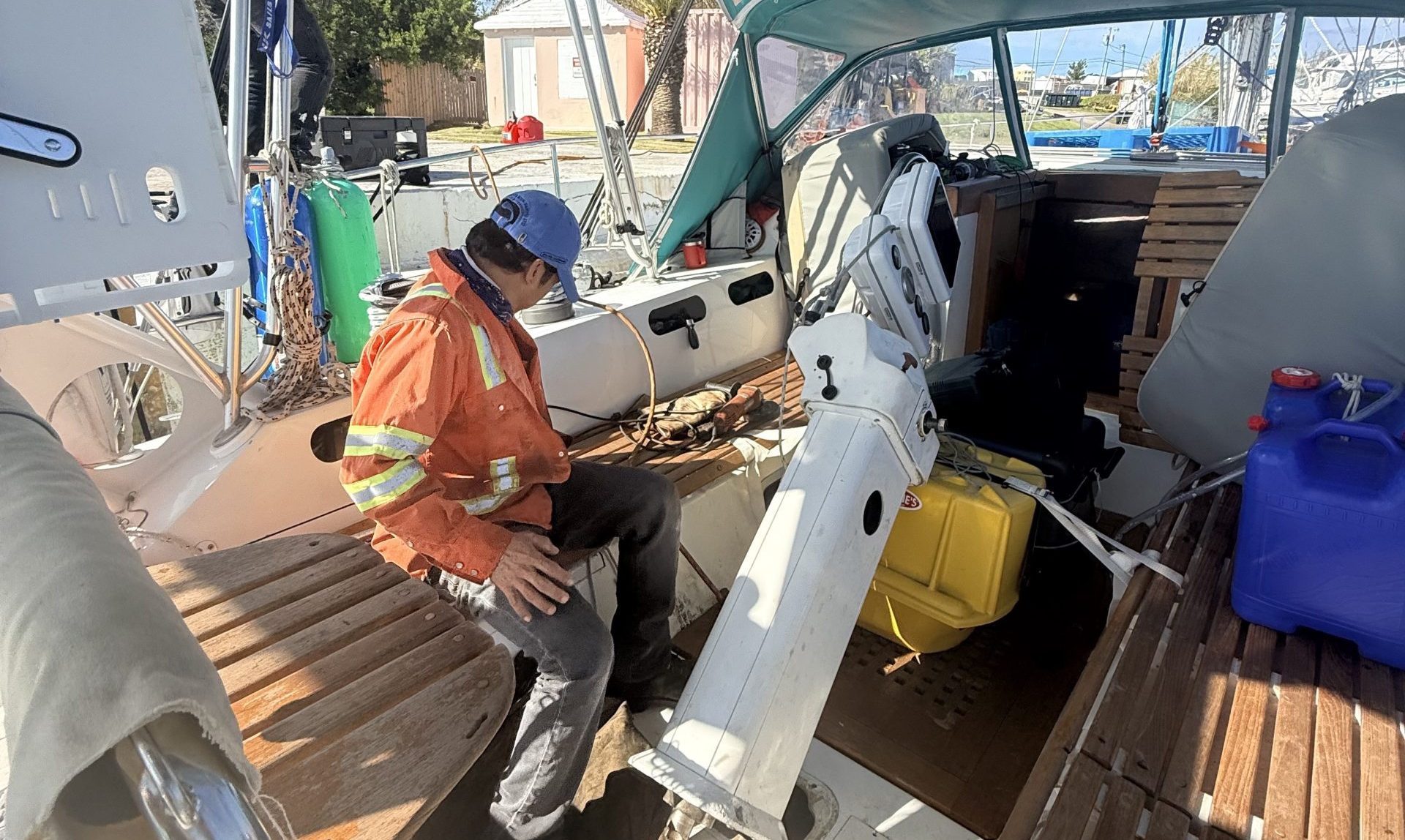
When the 42-foot aluminum OVNI Wavelength entered Bermuda, the immediate danger had passed. The damaged steering system had held together long enough to reach safe harbor, but once the steering pedestal was opened, it became clear that the voyage’s challenges were only beginning.
The steering casualty was far more than a broken part. Offshore emergencies rarely remain isolated. A steering failure affects power management, sail handling, communications, weather strategy, arrival planning, crew rest, and the ability to respond if another system fails. Every decision influences the next.
As with many offshore passages, the effects of the voyage continued long after the dock lines were secured. The physical and emotional demands of the storm remained with the crew even as repairs began.
As repairs got underway, information flowed continuously between the boat, the builder in France, repair facilities in Bermuda, the shoreside support network, and the crew.
Rather than searching for answers, HAL helped organize that growing volume of information into a practical sequence of priorities:
- Assess the stability of the rudder and steering system.
- Protect the rudder from additional shock loading.
- Confirm the autopilot could continue operating safely.
- Maintain communication with Bermuda authorities and repair facilities.
- Coordinate fabrication, welding, fuel, towing, and arrival logistics.
- Monitor official weather information while distinguishing it from A.I.-generated guidance.
- Continuously account for crew fatigue and changing conditions.
There were no magic answers.
HAL functioned as a second reviewer — organizing information, identifying gaps, suggesting priorities, and building a practical checklist from the crew’s observations, the shoreside support network, and the information still needed. Every operational decision remained the responsibility of the captain.
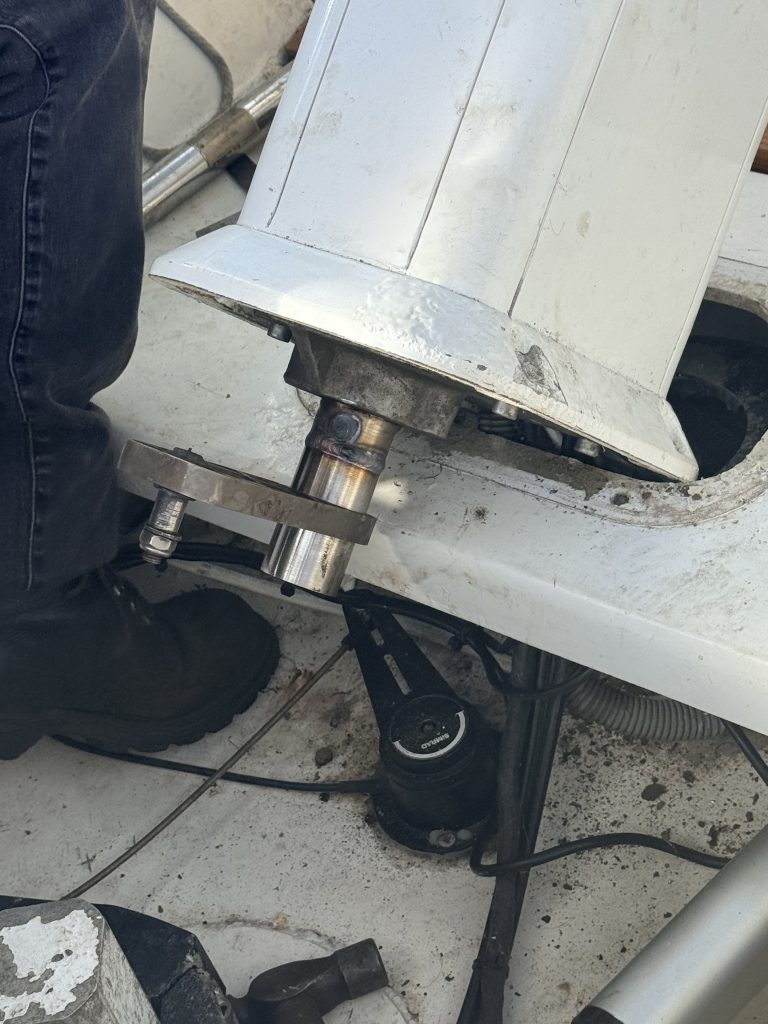
One unexpected success came through the support network assembled around the boat. Finding a fabricator capable of repairing a specialized aluminum steering component in Bermuda could easily have delayed the voyage. Working with the builder in France, local contacts, and HAL’s organized search of available repair resources, the crew located an experienced welder who was able to complete the repair without requiring the boat to be hauled immediately.
That dramatically simplified the recovery and allowed repairs to begin much sooner than expected.
Time is precious during an offshore emergency. Incomplete or vague information delays good decisions, both aboard and ashore. Artificial intelligence can only work with the information it receives. The captain — not the A.I. — remains responsible for every decision.
A report that simply says ”the steering broke” invites speculation. Needed are:
- A clear photograph.
- The exact location of the fracture.
- The sound heard before failure.
- Whether hydraulic fluid is present.
- Whether the rudder still moves.
- Whether the autopilot continues to steer.
Those observations provide a much safer starting point for analysis.
HAL proved useful because Bill and Captain Michele continuously supplied observations, photographs, measurements, and updates. It was never expected to invent a diagnosis from incomplete information.
It’s also important to remember that after 18 hours of manual steering in heavy seas, fatigue becomes another system failure. Memory declines, judgment slows, and communication suffers. Small problems become easier to overlook. So one of HAL’s most valuable contributions was not technical at all. It simply helped keep the growing volume of information organized while the crew and support team managed weather, repairs, communications, logistics, and exhaustion simultaneously.
HAL is intentionally limited. It asks for missing information. It distinguishes confirmed facts from assumptions. It points users toward official forecasts, manufacturers, government resources, and experienced professionals. Most importantly, it acknowledges when more information is needed.
However:
- It cannot inspect a boat.
- It cannot feel a rudder bind.
- It cannot hear a bearing beginning to fail.
- It cannot smell overheated wiring.
- It cannot judge the motion of a breaking sea from the cockpit.
Those responsibilities remain with the people aboard.
Technology can support seamanship. It cannot replace it. The skipper remains responsible for the vessel. Official weather services, rescue authorities,
professional routing, charts, manufacturers, repair yards, and experienced sailors remain essential.
Finding the right expertise proved as critical as diagnosing the failure itself. More cruisers are experimenting with artificial intelligence every year, often without realizing how easily general-purpose A.I. can mix outdated information, unsupported assumptions, and confident language.
HAL was developed around a different philosophy. Its value is not that it knows more. Its value is that it encourages better questions, identifies missing information, points users toward authoritative marine resources, and operates within clearly defined safety boundaries.
To help cruisers experience that approach, Seven Seas Cruising Association offers a limited public version of HAL. Readers can explore harbor information, marina resources, Port Cards, weather training, and other practical cruising tasks while seeing how a structured marine workflow differs from a general A.I. conversation.
The public version serves as an introduction. The full HAL Mariner system includes expanded workflows, curated marine resources, and decision-support tools developed specifically for offshore cruising.
The same governed framework can be adapted for a rally, a cruising region, or a specific operational task. A rally version might organize fleet notices, emergency contacts, weather references, port guides, repair resources, and communications procedures. A regional version could coordinate verified government links, clearance information, port details, local services, and emergency numbers.
For organizers, the value is coordination.
For crews, it is practical decision-making support under pressure.
For Wavelength, HAL became another member of the support team — not by taking command, but by helping the humans remain organized, informed, and ultimately responsible for every decision made offshore.
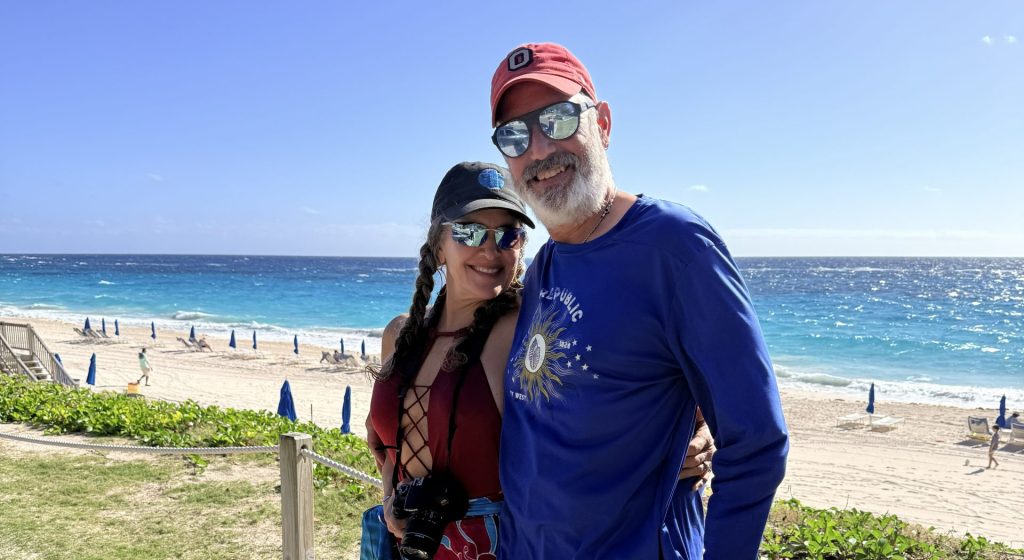
With the temporary repair completed and the steering system carefully monitored, Wavelength departed Bermuda and continued south about 10 days after the last boat in the Rally to Antigua. She carried Bill and Michele safely through the remainder of the offshore passage to St. Thomas, U.S. Virgin Islands, where the crew arrived without another steering failure. The repair had done exactly what it was intended to do: get the boat and her crew safely to their next destination. A permanent solution was found after all.
The complete HAL Mariner workflow is available as an SSCAn member benefit. A public version is also available through the SSCA Boating and Cruising Hub for anyone interested in exploring how this system works. It’s free for use, but users must have a guest or free ChatGPT account. Use this link to the workflow: chatgpt.com/g/g-6a112c2599f4819184a62dc8e11f50fe-ssca-boating-and- cruising-hub
This is a published ChatGPT (workflow) usable by anyone with the link, created for users by Caribbean Compass. Ask it to do a port card for St. Martin, ask what HAL is, ask about general routes for planning. This workflow is not full HAL, but will give a sample of how HAL supports cruisers.