




Story and photos by Kathleen Gallagher
It is all smooth sailing in the Caribbean — until it isn’t. When a pet is cruising with you, plans can unravel remarkably fast.
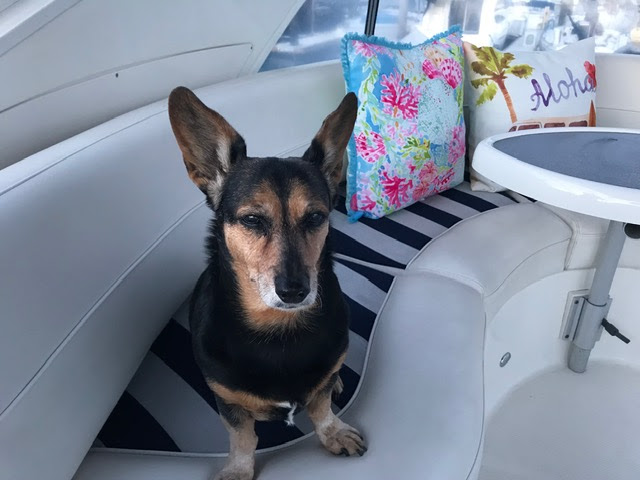
The yacht was provisioned, the route plotted, and the owners were ready to leave Miami for a long-awaited Caribbean season. Their dog, Quincy, lay beneath the salon table as though he, too, understood that paradise was only days away.
The owners contacted The Caribbean Pet just before departure — and learned that Quincy could not legally enter the first island on their itinerary.
His microchip had been implanted after his rabies vaccination. Under the island’s import protocol, the vaccination therefore could not be used. It would have to be repeated after microchipping, followed by the applicable waiting period and rabies antibody testing. The yacht was ready to sail. The dog was not.
This was not an isolated case.
Another cruising family planned to call at the Cayman Islands with their mixed-breed dog, George. His passport described him as a “bulldog mix.” When asked to be more specific, the owners supplied “Continental Bulldog,” believing the additional detail would help.
Instead, the Cayman Islands Department of Agriculture determined that George fell within its prohibited breed interpretation. Shore leave was denied. No last-minute certificate, explanation, or change of paperwork could make him eligible to enter. With visitors already waiting on the island, the cruising family’s carefully arranged plans were suddenly thrown into disarray.
This past season, another cruiser bound for the British Virgin Islands discovered that one dog’s FAVN rabies antibody test no longer met the destination’s validity requirements. The result was heartbreaking and expensive: The dog had to be flown back to the United States while the yacht continued south.
These stories share one truth every pet-owning cruiser must understand: Caribbean islands do not operate under a single pet-entry system.
Breed restrictions, microchip sequencing, vaccination dates, FAVN validity, import-permit processing, parasite treatments, health-certificate windows, arrival notifications, and veterinary-clearance procedures differ from island to island. Many destinations grant no exemptions because their regulations are designed to protect animal health and prevent the introduction of disease.
But when preparation begins early, the story reads entirely differently.
Six months before departure, a family with a golden retriever named Pirate contacts The Caribbean Pet about a winter itinerary through St. Lucia, Grenada, Antigua, and St. Vincent and the Grenadines. Breed restrictions are reviewed before the route is finalized. Pirate’s microchip is verified first, his rabies vaccination is correctly sequenced after it, and his FAVN test is completed early enough to satisfy the applicable requirements.
Every document is checked against the validity period for each island on the route — not only the first destination. Import permits are secured with time to spare, and veterinary appointments are scheduled so that health certificates are issued within each island’s precise time frame. Additional treatments and tests are done accordingly.
When Pirate’s family enters its first port, there is no drama at the dock. The yellow flag is raised, the family waits calmly aboard, and the chief veterinary officer reviews a complete, organized packet: import permit, laboratory results, vaccination record, and health certificate. The microchip is scanned, the documents are approved, and clearance is granted.
Paws touch the dock. A tail begins to wag. Paws in Paradise begins exactly as imagined.
The rules are layered and unforgiving, but they are navigable when preparation begins before the lines are cast off. Smooth sailing with a pet is not a hope. It is a plan.
With more than 15 years of professional pet travel experience and firsthand knowledge of the Caribbean, Kathleen and The Caribbean Pet have made it their mission to get paws to paradise. thecaribbeanpet.com