




Story and photos by Lexi Fisher & Chris Doyle
Reports of record-high murders and gun violence in Trinidad have understandably given some sailors pause. “Is it safe to sail to Trinidad?” is a frequent question in online forums. The answer, fortunately, is still “yes.” Most crime is gang-related and concentrated in Port of Spain, far from Chaguaramas, the island’s yachting hub and home to the Coast Guard. For most cruisers, recent experiences in Chaguaramas have been overwhelmingly positive.
Concerns about piracy in the waters between Trinidad and Venezuela are also common. However, while there were seven incidents between 2015 and 2019, there have been none since. Increased Coast Guard patrols, along with float plan monitoring and VHF coordination by North Post Radio and the Marine Services Association of Trinidad and Tobago, have likely contributed to this improvement. Hundreds of yachts safely make the passage to and from Trinidad every year, often to haul out for the hurricane season and take advantage of the plethora of affordable general and technical yacht services Chaguaramas has to offer.
They say that when Columbus landed on Trinidad he stumbled into a big party. Today, Trinidadians remain fun-loving, hospitable people who do indeed love partying. Steel pan music was invented here, a by-product of the oil industry and its discarded oil drums. Calypso, too, had its birth in Trinidad. These musical forms combine to help make Trinidad’s carnival one of the world’s finest celebrations.


Trinidad seems to reach out and almost touch Venezuela. The two were linked together only 11,000 years ago when the last ice age lowered the sea by 300 feet. It shares a rich diversity of plants, birds, and insects with the South American continent, and because it is an island, the abundant wildlife is more condensed and easily accessible than it is on the continent.
South American Indians inhabited Trinidad when Columbus arrived in 1498. The early Spanish colonization in 1776 was not successful, as the Spanish were too busy plundering South America. Governor Chacon then offered free land to all newcomers, and the colonization of Trinidad got underway with help from many French settlers. Port of Spain became the main town.
The British captured Trinidad and Tobago in 1797 and held the two islands until independence. In the early days Trinidad had a flourishing plantation economy based on sugar. The plantocracy found itself short of labor after the abolition of slavery, when former slaves quite naturally wanted no part of working on the plantations. The landowners’ solution to the problem was to import some 150,000 indentured servants from India. Today, Trinidad’s population is a blend of Indians, Africans, and Europeans, a mix that has generated some exceptionally good-looking people. Trinidad has a population of 1.2 million, about 350,000 of whom live in Port of Spain. Trinidad and Tobago became an independent twin-island state in 1962, a democracy in the British tradition.
During the last world war, the United States established major naval and air bases in Trinidad. They served to protect oil shipments to England, which were prime targets for German U-boats.

Trinidad has the good fortune to have large deposits of oil and natural gas, and a pitch lake. As a result it is more industrialized than the rest of the Caribbean and produces, among other things, steel and ammonia, which are exported. Trinidadians also build ships and undertake major construction.
Trinidad is modern. It has large shopping malls, similar to those in the USA, good roads and excellent repair and service facilities for yachts and super-yachts. Many yachtspeople enjoy spending part or all of the hurricane season here. The sightseeing is good, the hospitality great, and Port of Spain is a thriving, bustling town where something is always happening. In the north, Chaguaramas is a great place to overhaul your yacht and enjoy yourself at the same time, and a very secure place to leave your boat in dry storage.
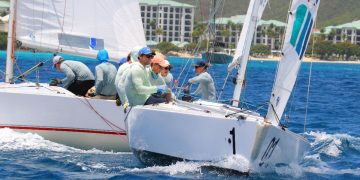
There are a good number of Trinidadian yachtspeople and they have an active yacht club, the Trinidad and Tobago Sailing Association (TTSA). They are particularly welcoming and friendly to visiting yachtspeople and members love to see everyone have a good time. There is also the Trinidad and Tobago Yacht Club (TTYC), though these days it is more motor-yacht focused.

Trinidad also has several out-of-the-way anchorages. These make perfect getaways for a few days of peace and quiet. Many of these offer great hiking for the adventurous. This is particularly true of the north coast bays, though getting ashore in any kind of swell can be tricky.
Doyle Guides contain the Eastern Caribbean’s most comprehensive and reliable sailing information, available in hard copy and online through a free mobile app, website, and Facebook group. (www.doyleguides.com).

Trinidad & Tobago Entry and Exit Procedures
Ports of Entry (POE):
There is one port of entry in Trinidad – Chaguaramas and two in Tobago – Scarborough in the south or Charlotteville in the north.
Advance Paperwork:
All yachts are expected to file a Float Plan to notify authorities of their pending arrival. On arrival, most crew are granted a visa waiver for three months. An import permit should be arranged in advance for any pets on board.
Entry Process:
After being cleared by Port Health, crew can proceed to Customs & Immigration (who will want to see all crew members). Expect more paperwork than in other Caribbean islands. When moving between ports, yachts must check in/out with Customs & Immigration.
Exit Process:
Clear-out with Customs, Immigration and the Port Authority. Immigration grant yachts up to 4 hours to depart (24 hours if clearing domestically). If departing for Grenada, it is possible to file a passage plan with the Coast Guard.
Rates:
Arrival fees include Immigration and Port Authority charges. Departure fees include a departure tax (if more than 2 crew on board) and navigation fees (based on time spent in country). Overtime fees are payable outside of normal operating hours.
Approximate clearance costs for a double-handed yacht staying up to 30 days (excluding overtime charges) is TT$900 (US$133). All fees are paid in cash (local TT$).
Check Noonsite for more detailed information and updates. This information is provided by https://noonsite.com/, specialists in worldwide formalities for yachts, and was accurate at press time.