



Story and photos by Keith Dickey and Rebecca Frontz
See also: Part One: Transatlantic Planning, Electric Style
Crossing the Atlantic with an electric propulsion system requires a combination of modern technology and timeless seamanship. This 21-day journey from St. Martin to the Azores covered roughly 2,200 nautical miles, offering moments of sheer tranquility, challenges to overcome, and valuable insights into life aboard an electrified sailing vessel.
In our previous article, we discussed the three common west-to-east Atlantic crossing routes: via Bermuda, a modified rhumb line, and the direct rhumb line.
We chose the direct rhumb line. Although often considered challenging by traditional sailboats, this route proved ideal for our electric-powered vessel for several reasons:
• Calm conditions: The light winds and small seas of the high-pressure zones allowed us to spinnaker sail and use our electric motor to move efficiently in very comfortable conditions.
• Solar efficiency: The clear skies typical of these zones kept our solar panels at peak performance, providing the energy needed for propulsion during daylight hours.
• Distance savings: By taking the shortest route, we minimized overall energy consumption and maximized the efficiency of our propulsion system.
In this article, we dive into the passage itself — a journey that began with idyllic conditions, transitioned into more dynamic tradewinds, and culminated in a rewarding arrival at the Azores.
Weeks 1-2: Champagne Sailing
For the first two weeks, the Atlantic offered conditions sailors dream about. Steady high-pressure systems brought calm seas, light winds, and sunny skies, creating a nearly utopian experience for everyone aboard.
Winds of 4-6 knots were just enough to keep either the symmetrical (downwind) or asymmetrical (broad-reaching) sail full. With motor-assisted sailing powered by our solar system, we maintained a steady 105 nautical miles per day without taxing the battery system. This pace gave us plenty of downtime to enjoy the best parts of cruising life. Gourmet meals were a daily highlight — seared steaks, vegetable stir-fries, and even freshly baked bread.
Evenings were equally peaceful, filled with movies on the tablet and card games. The calm seas allowed us to fully immerse ourselves in the joys of the passage, free from the usual distractions of engine noise or rough waters. Keith, with over 25,000 nautical miles under his belt, described this 14-day stretch as the most enjoyable sailing he’s ever experienced.
A crucial element of our success was the precision of our weather routing. Using Starlink and Windy, we checked the weather hourly, which allowed us to fine-tune our course, stay within favorable currents, and closely track the high-pressure ridge.
With light breezes, our big spinnakers carried us forward gracefully. Balancing these delicate sails required attention, but the reward was steady progress with minimal energy use, showcasing the harmony of wind and modern electric systems.
We usually ran the generator for 3-4 hours overnight to recharge the batteries while continuing to run the electric motor. At about 500 nautical miles away from the Azores, we had used about 40 gallons of our 80-gallon diesel reserve.
Week 3: Building Tradewinds
As we approached the final leg, the Atlantic began to assert itself. Winds increased to 10-15 knots, eventually reaching 25 knots with 6-8 foot following seas.
The motor-assist sail was no longer needed as we adjusted to the stronger conditions. Instead, we relied on a combination of reefed sails and careful steering to harness the power of the tradewinds. As our speed increased, we began producing hydro-regeneration, charging between 400-600 watts per hour.
While the growing waves demanded more vigilance, their direction — coming from the hind quarter — kept the ride comfortable. The boat handled the conditions beautifully, and the exhilaration of surfing down larger swells added a new kind of excitement to the journey.
Even in ideal conditions, long passages bring unexpected hurdles. This crossing was no exception, but our preparation and adaptability allowed us to navigate these moments effectively.
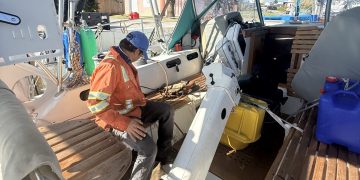
Throttle potentiometer failure: Early in the journey, the throttle’s potentiometer broke, temporarily disabling motor control. Fortunately, we had planned for this scenario by carrying a spare. Within an hour, the replacement was installed. Notably, our electric motor is so small and light that we actually carry a completely redundant 10 kW system onboard Vagari.
Battery malfunction: Toward the end of the passage, one of our 48V batteries began showing signs of failure. After isolating it from the system, we continued with a reduced capacity of 10 kWh, requiring more deliberate energy management. This challenge underscored the importance of redundancy and thoughtful system design for electric cruising. We will talk more about this in our next article.


Reflections on the Passage
Crossing the Atlantic is never without its challenges, but the combination of favorable conditions, advanced planning, and modern technology made this journey both smooth and rewarding.
The first two weeks offered a rare glimpse into the potential of electric cruising when paired with renewable energy sources and careful routing. Even in the final week, when conditions turned more dynamic, the boat and its systems proved capable and resilient.
The passage demonstrated not just the viability of electric propulsion but its ability to enhance the cruising experience, blending comfort, sustainability, and adventure in a way that traditional systems simply can’t match.
The lessons learned, along with a comparison of our passage to those of fellow sailors who crossed at the same time, will be the subject of the next article.
Send questions and feedback about sailboat electrification to sail.vagari@gmail.com.