



Saint Martin is a unique Caribbean destination divided between two nations – the southern Dutch Sint Maarten and the northern French Saint Martin – yet it functions as one vibrant island. This comprehensive 2025 travel guide covers everything you need to know about visiting both sides of St. Martin, from practical arrival info to the best beaches, dining, and cultural experiences.
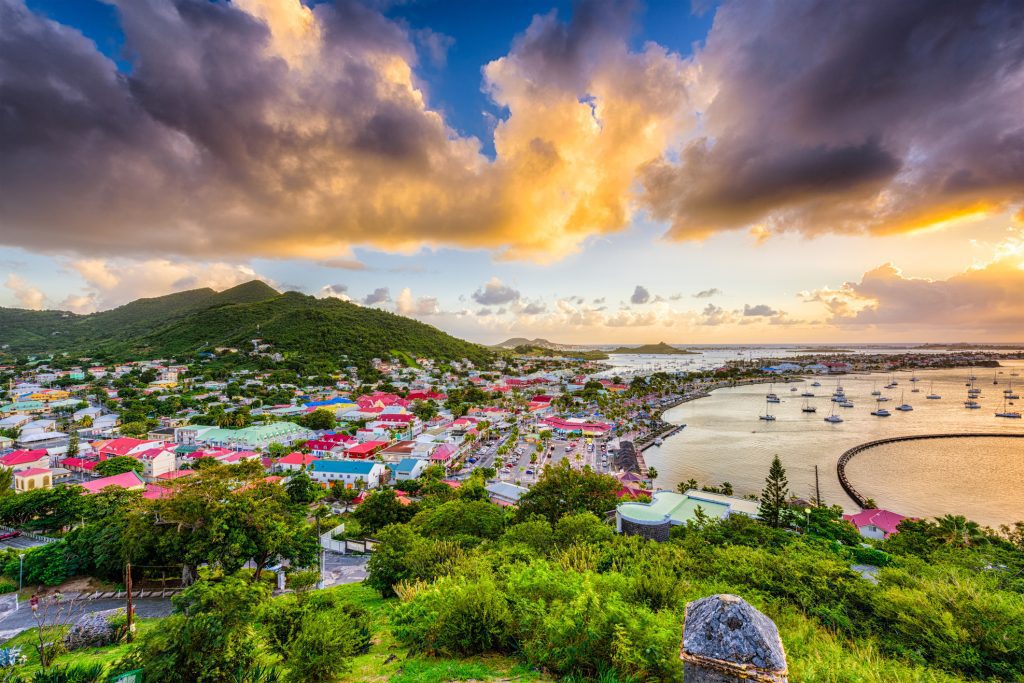
Overlooking a coastal town and Simpson Bay Lagoon on St. Martin, which is famous for its scenic beauty and 37 stunning beaches.
Both the Dutch side (Sint Maarten) and French side (Saint Martin) offer a rich mix of attractions. The Dutch side is known for its festive nightlife, casinos, duty-free shopping (especially jewelry), guavaberry rum drinks, and lively beach bars. The French side is famous for its gourmet cuisine, chic boutiques, open-air markets, and even a few clothing-optional beaches. Together, they boast excellent cuisine blending French, Creole, and West Indian flavors and 80+ nationalities living harmoniously, which means English is widely spoken alongside French and Dutch. Whether you’re seeking relaxation on one of the 37 beaches, adrenaline adventures, family fun, or romantic escapism, St. Maarten/St. Martin has something for every travel style. Let’s dive into the details of planning an unforgettable trip.
- Getting There
By Air: The primary gateway is Princess Juliana International Airport (SXM) on the Dutch side, renowned for its runway ending just steps from Maho Beach. SXM offers numerous direct flights from North America and Europe. From the USA, you can fly non-stop from major hubs like Miami, New York (JFK), Atlanta, Charlotte, Philadelphia, Boston (seasonal), Chicago, Newark, Washington, D.C. and more. Airlines such as American, Delta, JetBlue, United, Spirit, and Frontier all service SXM year-round. Typical flight times are about 3–4 hours from U.S. East Coast gateways. From Canada, direct flights from Toronto and Montreal are available in high season (Air Canada and WestJet).
From Europe, the main direct routes are via Paris-Charles de Gaulle (Air France, ~9 hours) and Amsterdam Schiphol (KLM, ~8 hours). The Paris flight operates several times weekly, and KLM often combines St. Maarten with a stop in Curaçao. There are currently no direct flights from the UK to SXM – British travelers usually connect in Paris, Amsterdam, or through U.S. hubs. In the Caribbean region, SXM is a hub: local carrier Winair and others connect to Anguilla, Saba, St. Barthélemy, St. Kitts, San Juan, and more. The French side’s Grand Case L’Espérance Airport (SFG) handles inter-island flights and small regional jets, making it useful for short hops (like from Guadeloupe or St. Barts).
Entry Requirements: A valid passport is required for all international visitors. U.S., Canadian, and EU citizens do not need advance visas for tourist stays. As of late 2024, St. Maarten requires travelers to complete a quick online ED (Embarkation/Disembarkation) card prior to arrival, which streamlines immigration. There is no visa or passport control between the French and Dutch sides – once you’ve entered one side, you can freely travel to the other without border checks. On departure from SXM to the U.S., note that U.S. customs and immigration are processed upon arrival in the States, as there is currently no U.S. pre-clearance facility in St. Maarten (unlike some other Caribbean airports). Keep this in mind if you have a connecting flight in the U.S. – you’ll go through customs at your first point of entry.
By Cruise or Ferry: St. Maarten is a major cruise ship port – up to six ships can dock at Philipsburg’s A.C. Wathey Pier on busy days. Cruise visitors clear immigration with the ship, and can easily explore the island on shore excursions or independently by taxi. If you’re island-hopping by ferry, you can reach St. Martin from neighboring islands. There are frequent daily ferries between Marigot (French side) and Anguilla (20 minutes each way), as well as regular ferry service from St. Martin to St. Barts (from Philipsburg or Marigot, ~45 minutes) and to Saba (~90 minutes). Ferry schedules vary by season, and crossings to St. Barts or Saba can be quite rough, but are mercifully short (about 30–45 minutes to St. Barts and Anguilla). Always check schedules and entry requirements for the neighboring island you plan to visit – for example, Anguilla and St. Barts each have small departure taxes and require passports for entry.
By Yacht or Sailboat: If you’re arriving with your own vessel or via a sailing charter, St. Maarten/St. Martin is extremely welcoming to boaters. There are multiple official ports of entry. On the Dutch side, you can clear in at Philipsburg (Great Bay) or Simpson Bay; on the French side, clearance is done at the Marigot Harbor office on the waterfront. Only the captain needs to go ashore with ship documents and passports to handle immigration and customs. There are nominal fees (under \$10) for clearance and harbor dues. Note: The island is split between two jurisdictions, so technically if you move your boat from one side to the other, you should clear out and back in. However, many cruisers stay within the Simpson Bay Lagoon which straddles both sides without formalities. Generally, choose one side to clear into and you can explore the entire island freely by land.
- Marinas and Boating
St. Martin is a premier sailing destination, often called the Yachting Capital of the Northeastern Caribbean. The island’s large Simpson Bay Lagoon (shared by both sides) is one of the largest inland lagoons in the West Indies and offers well-protected waters for anchoring. Access into the lagoon is via two lift bridges: the Simpson Bay Bridge on the Dutch side and the Marigot Bay Bridge on the French side. Bridge opening times are scheduled several times per day (typically morning and late afternoon) – yachts line up to enter or exit when the bridges are raised. If you have a vessel, hail the bridge operator on VHF (channel 12 for Simpson Bay Bridge) to request opening. The Simpson Bay Bridge can accommodate yachts up to 17m wide and 6m draft. Once inside, observe the 5-knot no-wake speed limit and watch the channel markers (both sides use the “red, right, returning” buoy system).


Marinas: There are over half a dozen full-service marinas around the lagoon and island, catering to everything from small sailboats to mega-yachts. On the Dutch side, popular marinas include IGY Simpson Bay Marina (126 slips, yachts up to ~75m), Yacht Club Port de Plaisance (90 slips, up to 80m, with on-site resort and casino), IGY Isle de Sol (40 slips exclusively for mega-yachts up to 90m), and Bobby’s Marina in Philipsburg (150 slips, accommodates vessels up to 90m). Also in Simpson Bay are smaller marinas like Palapa Marina, The Yacht Club at Port de Plaisance, and Lagoon Marina (popular for long-term cruisers). On the French side, Fort Louis Marina in Marigot welcomes visiting yachts (with customs office on-site), and Port La Royale (Marina Royale) in the heart of Marigot has restaurants and boutiques alongside the docks. In the far north, Anse Marcel has a picturesque small marina (Port Lonvilliers) accessed by a narrow channel – a lovely spot if your draft allows. Basic mooring balls are available in the Réserve Naturelle areas (like around Pinel Island and Ilet Tintamarre) for day visits to protect reefs.
Anchorages: St. Martin offers many scenic anchorages. Simpson Bay (outside the bridge) is a wide anchorage with a sandy bottom – convenient for those who prefer not to enter the lagoon (no bridge fees if you stay outside). Marigot Bay on the French side is another excellent anchorage with good holding; fees are collected for overnight anchoring in Marigot’s designated zones. You can dinghy into Marigot or Simpson Bay easily for shore access. Other popular anchor spots include Grand Case Bay (calm in easterly winds, beautiful view of the village – and you can swim in for dinner at the lolos!), Orient Bay (more exposed, but buoys are often available near Pinel), and Crocus Bay (Baie Rouge/Plum Bay area) in calm conditions. Always consult charts – reefs and shoals exist around the coast, so navigation requires caution.
Harbor Insights: Upon arrival, all vessels must complete customs and immigration clearance at their port of entry (either Dutch or French side). The procedure is straightforward – present crew passports, ship registry, and last port clearance. The island is duty-free, so there are no import fees for standard provisions (declare any firearms or restricted items on entry). If clearing on the Dutch side and entering the lagoon, you’ll also pay a small bridge and anchorage fee at the Simpson Bay Lagoon Authority office (located at the Police Station by the Simpson Bay Bridge; e.g. \$5 for boats <100 tons). The Heineken Regatta in early March is a world-famous sailing event – marinas and anchorages get busy with racing yachts and parties. Outside of regatta time, there is usually ample space. Marine services on the island are top-notch: you’ll find fuel docks, chandleries, boatyards, sailmakers, and technicians for all needs, especially around Cole Bay and Marigot. Many long-term cruisers base themselves in St. Martin for hurricane season repairs or wintering over.
Tips: If you plan to charter a boat, several companies operate out of St. Martin – both bareboat and crewed charters are available, letting you explore nearby islands at your leisure. For day trips on water, you can join catamaran cruises, snorkeling excursions, or even America’s Cup race boat experiences out of Simpson Bay. Remember that French-side waters are part of a protected nature reserve, so fishing is restricted and drones are not allowed in reserve zones. Lastly, enjoy the camaraderie – the boating community here is vibrant, with nightly happy hours at sailor bars like Lagoonies (Cole Bay) or the Sint Maarten Yacht Club bar by the Simpson Bay Bridge where you can swap sea stories as mega-yachts glide by.
- Transportation
Getting around St. Maarten/St. Martin is relatively easy given the island’s small size (87 km² / 34 sq mi). There is no internal border to worry about – you can drive from one end to the other in about an hour, traffic permitting. Here are the main transportation options for visitors:
• Rental Cars: Renting a car is one of the best ways to explore the island at your own pace. Major agencies (Hertz, Avis, Europcar, local companies, etc.) operate at SXM Airport and in towns. Prices range from \$30–\$60 per day for a compact or sedan, and fuel is priced per liter (a bit higher than U.S. prices, roughly \$1.20–\$1.50/L in 2025). Driving is on the right-hand side of the road (same as U.S./Canada). The island’s roads are mostly paved and in decent condition, though they can be narrow and winding in hilly areas. Traffic can be a challenge during rush hours and when cruise ships are in port – the worst bottlenecks are around Simpson Bay (bridge openings stop road traffic a few times a day), Marigot’s center, and the Bellevue/Cole Bay border road at peak times. Plan extra time if you have appointments or a flight. Parking is free in most places but can be scarce in downtown Philipsburg and Marigot – look for paid parking lots or park a bit away and walk. Tip: Rent a GPS or use an offline map app since signage can be limited once off main roads. Also, be prepared for sudden speed bumps and motorbikes zipping past. Keep valuables out of sight when parked (petty car theft can occur on secluded beaches).
• Taxis: Taxis are widely available, especially on the Dutch side at the airport, cruise terminal, and major hotels. They are a convenient way to get between popular areas without driving yourself. Taxi fares are government-regulated and charged by zone (not metered). Always confirm the fare in advance based on your destination. For example, a taxi from the Airport to Philipsburg or to Marigot will have a fixed rate (often around \$20–\$30 for 1-2 people, more for larger groups), and cross-border trips carry a set surcharge. Taxis will take USD, Euro, or Antillean Guilders (and credit cards in some cases, but cash is easier). Note that after 10pm, an added late-night fee may apply. Official taxis have license plates starting with “TAXI” and drivers carry an ID permit. The drivers are generally friendly and full of local knowledge – they might offer to be your tour guide for an hourly rate if you want to hire a cab for island sightseeing. Rideshares: Uber/Lyft do not operate on the island as of 2025, so taxis or car rentals are the main motor options.
• Public Buses (Minivans): For a budget-friendly local experience, hop on a minibus. These privately operated vans run along the main road routes and are used by locals for cheap transport. There are no formal schedules – instead, vans display their destination on the front windshield (e.g. “Philipsburg”, “Marigot”, “Mullet Bay”) and you can flag them down along the road. Key routes include Philipsburg ↔ Marigot (via Simpson Bay and Maho), Philipsburg ↔ Cole Bay, Marigot ↔ Grand Case, etc. A typical fare is \$2–\$3 per ride (paid in USD or Nafl, and Euros accepted on French side). They will stop anywhere on route if you request. It’s a great way to meet locals, though can be hot and crowded at peak times. Service usually winds down by early evening (~7-8pm), so not ideal for late night returns. Tip: Carry small bills for the fare, and don’t be shy – just wave at an approaching van to stop, and say “bus stop” or “here please” when you want to get off. It’s informal but efficient. The minibuses connect all major districts frequently during the day.
• Transfers and Tours: Many hotels offer shuttle transfers (particularly the all-inclusives and larger resorts for airport pick-ups). If you prefer not to drive, you can also book a private driver or concierge car service – this is a pricier option but available for VIP travel. Organized tours often include transportation: for instance, a guided island tour in an air-conditioned van, or adventure tour companies that pick you up for activities like ziplining or snorkeling excursions.
• Ferries (Local): While there is no need for a ferry within the island (since it’s a single landmass), there are ferry services to other islands (covered in the Island-Hopping section). One notable local service: a water taxi in Philipsburg shuttles cruise passengers from the pier to the center of the Philipsburg boardwalk. This boat taxi runs frequently on cruise days, costing around \$7 round-trip – a fun, scenic 5-minute ride across Great Bay to avoid a 15-minute walk in the sun.
• Cycling & Walking: St. Martin is not very bike-friendly (no bike lanes and hilly in parts), but cycling is possible in certain areas. Some hotels have bikes for guest use, good for short rides in flat areas like Simpson Bay or Orient Bay. Walking is practical within towns: Philipsburg’s shopping area and boardwalk are very pedestrian-friendly, and Marigot’s waterfront and market area are easily walkable. However, roads between towns are narrow with no sidewalks, so hiking between towns is not recommended. Instead, explore walking trails in designated areas (see Attractions for hiking info).
• Crossing the Border: The land border between Saint Martin (French) and Sint Maarten (Dutch) is completely open – you typically won’t even notice you’ve crossed except for a sign and a monument. There are no border checkpoints or customs stops for cars or people. You can drive around the entire island without impediment. This is very convenient, but note the different road signs: on the French side, signs and speed limits are in French/metric (speed in km/h), while on the Dutch side you’ll see signs in English or Dutch and speeds sometimes in km/h (officially, as in Philipsburg) or mph (though mph is less common now). In practice, everyone mixes units, so just go with the flow of traffic. Also, the currency changes: Dutch side prices are often in Netherlands Antillean Guilder or more commonly USD, while French side uses Euro – but both USD and Euro are accepted almost everywhere island-wide, albeit with varying exchange rates.
In summary, renting a car offers the most flexibility to see all corners of the island (don’t be afraid to explore off the beaten path beaches!), whereas taxis and minibuses can handle most point-to-point needs if you’re sticking to major areas. The island’s compact size means you’re never too far from your next stop – just pack some patience for the occasional traffic snarl, and enjoy the scenic drives with turquoise sea views along the way.
- Dining and Nightlife
One of the highlights of any St. Martin trip is the food and nightlife scene. This island is often called the Cuisine Capital of the Caribbean, and for good reason – the fusion of French, Creole, and international influences means you’ll eat extraordinarily well, from high-end gourmet to street-side BBQ. After dark, the Dutch side in particular comes alive with bars, beach parties, and casinos. Below is an overview of key areas and what to expect:
Simpson Bay & Cole Bay (Dutch Side): This area is the epicenter of nightlife on the island, with a dense concentration of restaurants, beach bars, and nightclubs along Simpson Bay Road. By day, Simpson Bay’s long beach and calm waters draw sunbathers; by night, the strip hops with activity. You’ll find everything from casual eateries to trendy lounges. Restaurants: Top picks include Topper’s Restaurant & Bar (famous for hearty American-Caribbean fare and house-made rum), Skipjack’s (seafood grill overlooking the lagoon), Jimbo’s (Tex-Mex in a courtyard setting), La Sucrière (a French bakery for morning pastries), and Avantika (upscale Thai cuisine) – all within a short walk of each other. There’s also Pineapple Pete in Cole Bay, a beloved spot for seafood, ribs, and live music (and yes, Pete is real!). For fresh fish with local flavor, try the unassuming Lagoonies Bistro in Cole Bay – a hit with the yachting crowd. Bars & Clubs: Simpson Bay boasts beachfront bars like Buccaneer Beach Bar (casual, on Kim Sha Beach, with bonfire parties and live bands weekly) and Karakter (a chilled-out lounge/bar at the far western end of Simpson Beach). The Red Piano is a famous piano bar (located at Pelican Resort) featuring live music and a lively expat scene. Late at night, popular clubs include XO Nightclub and Lotus for dancing until the early hours. Also check out Soggy Dollar Bar (a waterfront open-air club named for the wet dollars of yachties who dinghy in) – it’s a Friday night hotspot. Cole Bay has Melange and 3 Amigos (actually near Maho) which are fun for a more laid-back bar vibe. Casino: While not in Simpson Bay proper, the largest casino, Casino Royale, is just over the hill in Maho. Simpson Bay itself has Paradise Casino and Hollywood Casino if you fancy a flutter. Overall, Simpson Bay’s vibe is lively but laid-back – you can dine in flip-flops or dance barefoot in the sand. Many spots here stay open past midnight, especially in high season.
Maho and Mullet Bay (Dutch Side): The Maho Village area near the airport is another nightlife hub, compact but buzzing. Here you’ll find Casino Royale (the island’s biggest casino with table games, poker, slots and often Vegas-style shows), surrounded by restaurants like La Rosa (Italian), JAX Steakhouse, and Moulin Fou (French-Asian fusion). Sunset Beach Bar, perched at the edge of Maho Beach, is iconic – by day it’s the plane-spotter’s paradise (with surfboard signs listing airline arrivals) and by night it becomes a beach party bar with DJs or live bands. Maho has a few nightclubs such as Tantra (popular for EDM and themed parties) and Sky Beach (a rooftop lounge/club). For a cheeky fun evening, Cheri’s Café (if reopened) was known for its drag and comedy shows with audience participation. Just down the road, Mullet Bay beach doesn’t have nightlife (it’s a gorgeous beach by day), but the nearby Mullet Bay Golf Course sometimes hosts events. Maho/Mullet is within a 5-minute drive of Simpson Bay, so these areas together form the core of Dutch-side nightlife. Expect a younger crowd and busy bars when the island is full.
Philipsburg (Dutch capital): Philipsburg is vibrant during the day – cruise visitors throng the duty-free Front Street and Boardwalk – but it quiets down significantly at night. Still, there are some gems for an evening out. Along the boardwalk, The Greenhouse and Dirty Sanchez Crew Bar are casual waterfront bar-restaurants great for happy hour or a nightcap, and Oualichi and Blue B*tch Bar (despite the name, it’s family-friendly) offer cold drinks with ocean views. Holland House’s Ocean Lounge is an upscale restaurant/bar with a lovely outdoor terrace on Great Bay, ideal for a romantic dinner or stylish cocktails. Nightlife in Philipsburg mainly revolves around the casinos: try your luck at Front Street Casino, Jump-Up Casino, or Diamond Casino – these are smaller than Maho’s but have a local feel. Occasionally there are events at the Boardwalk or Head of Boardwalk stage (like during Carnival or holidays). If you’re staying in Philipsburg, you might taxi to Simpson Bay for late-night action, as P’burg by 9-10pm is low-key except for casinos and a few bars. One unique stop: The Yoda Guy Movie Exhibit on Front Street – not nightlife, but a cool museum/bar by day that any Star Wars fan would appreciate (created by Nick Maley, who worked on Yoda). Keep in mind, Philipsburg’s restaurants cater mostly to lunch and day crowds; if you plan to dine here for dinner, check closing times or make reservations as some close early when no ships are in port.
Marigot (French capital): Marigot in the evening has a French Riviera charm, albeit quieter since Hurricane Irma (2017) impacted some businesses. Still, several excellent restaurants and lounges operate. Around Marina Port La Royale, you’ll find elegant French bistros like Bistro de la Mer, Le Tropicana (classic French cuisine with a local twist, very popular – try their foie gras or fresh fish dishes), and La Main à la Pâte (Italian). For a stylish dinner, Le Galion and O’Plongeoir are also well-regarded. Many Marigot restaurants close on the early side (~10–10:30pm), so plan for a European-style leisurely dinner rather than late-night partying. After dinner, you might stroll along the harbor – sometimes there are local music or small events at the promenade. Marigot’s West Indies Mall rooftop bar is a nice spot for an evening drink with views of the lagoon. On certain nights, the Marigot waterfront market area might have food trucks or BBQ stands (especially around festival times). Marigot doesn’t have casinos (gambling is only on Dutch side), and the nightlife is more relaxed and refined. It’s a perfect place to enjoy French wine over a long meal. If you’re craving dessert, look for gelato or crêpes at a local creperie – or grab late-night Accras (salt-cod fritters) from a street vendor if available.
Grand Case (French Side): Grand Case is often hailed as the culinary heart of St. Martin – a small beach town absolutely packed with restaurants, earning it a reputation for “gourmet capital of the Caribbean”. The main boulevard (Boulevard de Grand-Case) is lined with eateries ranging from high-end dining to casual lolos. Fine Dining: Don’t miss Le Pressoir, set in a historic Creole house – it offers inventive French-Caribbean cuisine (e.g. lobster thermidor or Creole snapper) in a romantic setting. Bistrot Caraïbes is another top choice, famous for its lobster (you can pick yours from the tank) and French classics; and La Villa consistently wows guests with French fare and friendly service (and often complimentary house-made rum digestifs). L’Auberge Gourmande is a Grand Case institution featuring foie gras, escargots, and other rich French indulgences – it’s frequently named one of the island’s best (they even host special multicourse dinners). Casual Dining: Scattered between these gourmet spots are the open-air barbecue joints known as “lolos.” At the lolos (like Sky’s the Limit, Sunset Café, or Talk of the Town), you sit at picnic tables by the smoke of the grill, feasting on jerk chicken, ribs, grilled lobster, johnny cakes, plantains, and more for just ~$10–$20 a plate. It’s a must-do local experience for flavor and atmosphere. Most lolos close by about 8-9pm when they sell out of food. Nightlife: While Grand Case is mainly about eating, there’s some evening entertainment. Many restaurants have a laid-back bar area – try Rainbow Café at the far end of town, which by day is a beach bar and by night turns into a lounge with cocktails and sometimes live music or DJ sets (they occasionally throw full moon parties on the beach). On Tuesday nights in high season, Grand Case hosts “Mardis de Grand Case”, a street festival with music, arts and crafts vendors, and a Carnival-like atmosphere. The road closes to traffic, street performers come out, and the whole town becomes a party – an absolute blast for visitors and locals alike. Outside of festival nights, Grand Case is fairly quiet after dinner; many people stroll the beach under the stars or head back to their hotels by 11pm. If you’re staying in Grand Case and want late-night action, you might drive to Orient Bay or Simpson Bay. But truly, a perfect Grand Case evening is a leisurely dinner with a view of Anguilla across the water, followed by rhum agricole or Guavaberry liqueur sampling at an open-air bar.
Orient Bay & Quartier d’Orléans (French Side): Orient Bay is known for its beautiful long beach and daytime fun, but it also has some evening appeal. Along Orient Village square, a handful of restaurants (often with outdoor seating around a central courtyard) serve dinner – e.g. Le Piment (French bistro), Little Italy, and Cote Plages. On certain nights, Orient Village has live music in the square, creating a family-friendly nightlife scene until about 10pm. Most beach bars at Orient (like Bikini Beach, Kontiki, Kakao) close by sunset or shortly after, except when they host occasional night parties or during special events. Quartier d’Orléans, the area near Orient, is mainly residential, but if you’re adventurous and want local nightlife, there are a couple of small bars with Caribbean music (and one or two lotto shops/bars where locals socialize). Not a typical tourist thing, but it’s there. Orient is a good area for a laid-back evening, especially if you like mixing with the expats who live around Orient Village.
Elsewhere on the Island: Other pockets of dining/nightlife include Friar’s Bay (home to the famous Friar’s Bay Beach Café and Kali’s Beach Bar, which used to host legendary full-moon parties pre-Irma – they are quieter now but sometimes do Sunday afternoon music sessions). Nettle Bay (Baie Nettle) has a strip of hotels and restaurants like Dreams and Mezza Luna, which occasionally have DJ nights or events. Cupecoy area (near the Dutch-French border on west) has a few nice restaurants at Porto Cupecoy marina (like Rendezvous Lounge for casual and Mario’s Bistro for upscale) and the area has a couple of late-night spots (there was a casino and nightclub in Cupecoy, but these come and go). Mullet Bay doesn’t have night spots, but on weekends, you might find an impromptu bonfire or party by locals. If you’re in the Dawn Beach/Oyster Pond area, nightlife is minimal since the hurricane damage – it’s more about a quiet drink at your resort’s bar, listening to the waves.
What to Expect: In high season (winter and spring), the nightlife is buzzing – bars will have theme nights (ladies’ night, Latin night, karaoke, etc.), and you might catch live bands playing everything from reggae to rock. In off-season (summer), things calm down; some restaurants take annual closure in September/October. Always check if a particular restaurant is open, and consider making reservations for the top restaurants in Grand Case and Simpson Bay, especially on weekends. Smoking is permitted in some outdoor bar areas (particularly on the French side you’ll see cigar or cigarette smokers at cafes). The dress code is smart casual in most places – shorts and nice t-shirts are fine at most restaurants, though a few upscale ones on the French side might prefer collared shirts and sundresses. For nightlife, casual beachwear is fine for beach bars, while clubs in Maho/Simpson Bay see more dressed-up attire (think tropical chic).
Safety: By and large, the nightlife areas are safe and welcoming. Use normal precautions – don’t leave your drink unattended, and if driving late, be cautious on dark roads. DUI laws exist; better to take a taxi after a big night out. Petty crime can occur in tourist zones late at night, so travel in groups on foot or take a cab between far spots, and avoid unlit backstreets in Philipsburg or Marigot after hours. That said, St. Martiners are friendly, and you’ll often find they look out for visitors.
From savoring a sunset cocktail with your toes in the sand, to dancing under the stars at an open-air club, to lingering over a French gourmet meal – the island’s dining and nightlife options are diverse. It’s perfectly possible to have a tranquil, romantic evening one night and a wild bar-hopping adventure the next. The blend of cultures ensures there’s always a new flavor to try or a new rhythm to dance to.
- Lodging
St. Maarten/St. Martin offers a wide range of accommodations to suit every budget and style – from economical guesthouses to lavish beachfront villas. Below, we break down where to stay by category, including specific recommendations across the island’s Dutch and French sides. No matter where you stay, you’re never far from a beach!
Budget Stays (< \$150/night): Travelers on a budget will find cozy guesthouses, apartments, and a few hostels mainly in Dutch-side towns or off-beach locations on the French side. In Philipsburg, check out Vicky’s Keys (a hostel/guesthouse in a local neighborhood offering dorm beds and private rooms – great for backpackers) and Pasanggrahan Royal Guesthouse, the island’s oldest hotel, which offers modest rooms right on the beach at reasonable rates. In Simpson Bay, Baker’s Suites provides modern studio apartments (with kitchenettes) often under \$150 in low season – plus it’s walking distance to the Simpson Bay action. Turquoise Shell Inn is another value choice in Simpson Bay, a small inn with a pool just a block from the beach. On the French side, look into Hevea Hotel or Love Boutique Hotel in Grand Case, which sometimes have rooms under \$150 – you’ll be steps from Grand Case Beach and the foodie strip (some rooms are small, but the location makes up for it). Orient Bay has some budget-friendly studio rentals and B&Bs a short walk from the beach (often listed on Airbnb or Booking.com). Also, Airbnb and VRBO have plenty of private rooms or apartments hosted by locals that can be very affordable – for example, a studio on the French side might go for \$80–\$100 a night. These budget options may not have all the fancy amenities, but they often offer a more local experience and warm hospitality. Tip: traveling in the off-season (summer/autumn) can yield deep discounts even on mid-range hotels, effectively bringing them into the budget category.
Mid-Range Hotels (\$150–\$350/night): The majority of the island’s hotels and resorts fall into this category. On the Dutch side, Simpson Bay Beach Resort & Marina (formerly a timeshare resort) is a popular mid-range choice – it’s a large property on Billy Folly hill with multiple pools, a small beach, a casino, and restaurants. Rooms there are condo-style (full kitchens), great for families or longer stays, typically in the \$200–\$300 range. In Philipsburg, the Holland House Beach Hotel is a favorite: boutique style, smack on the boardwalk beach, with chic rooms and a great restaurant/bar – a solid 3.5-star experience in the mid \$200s. Nearby, Divi Little Bay Beach Resort (on a peninsula just outside Philipsburg) offers a mid-range all-inclusive or room-only resort experience with multiple pools, dining options, and a lovely beach in a sheltered bay. Divi’s rates vary but often hover around \$300/night for a studio. On the French side, La Playa Orient Bay is a fully renovated 4-star hotel on Orient Beach that’s often in the \$250–\$300 range – it comes with beach chairs for guests and a hip beach club vibe by day. Another Orient Bay option is Hotel La Plantation, with spacious villa-style units on the hillside (a short walk from the beach); it offers a quiet environment and kitchenettes in each unit. Grand Case Beach Club, located on the fringe of Grand Case town, is a mid-range gem: it’s a small resort with two pretty beaches (Petit Plage), offering studios and one-bedrooms with kitchens – rates can be around \$250–\$350. They also have free continental breakfast and loaner snorkel gear, and it’s just a short walk to Grand Case restaurants. Mercure St. Martin (now rebranded as Hommage Hotel & Residences) in Baie Nettle is a mid-range French-side hotel on the lagoon – it has a gorgeous pool and stylish art theme, with rates often under \$200. It’s not on the ocean beach, but Baie Nettle’s beach is across the road and Marigot is 5 minutes away.
Luxury Resorts (\$350 and up): If you’re seeking pampering, there are a handful of true luxury properties on the island. The crown jewel is Belmond La Samanna, a five-star resort on a pristine stretch of Baie Longue (French side). La Samanna features elegant beachfront rooms and suites, private plunge pools, an award-winning restaurant, and a wine cellar, plus a spa – it’s routinely ranked among the Caribbean’s top resorts. Expect rates \$700+ in high season (with private pool villas running into four digits). Another upscale option is Sonesta Ocean Point Resort, an adults-only all-inclusive on the Dutch side in Maho. Ocean Point is the high-end wing adjacent to the family-friendly Sonesta Maho Beach Resort. At Ocean Point, guests enjoy butler service, swim-out suites, an infinity pool overlooking Maho Beach, and exclusive gourmet restaurants (plus access to all facilities at Sonesta Maho). Rates are often \$500+ per night all-inclusive. On the French side, a new luxury contender is Secrets St. Martin Resort & Spa at Anse Marcel – a 5-star all-inclusive set on a secluded cove where a lush green mountain backs the white sand. It opened in early 2020 (post-Irma rebuild of the former Riu) and offers a luxury experience with multiple dining options, a large infinity pool, and a beautiful beach. Nightly rates ~$400–\$600 all-inclusive for two. For those who prefer boutique luxury, Hotel L’Esplanade in Grand Case is a sublime option: perched on a hill above town, it has stylish suites with kitchens, an infinity pool, and a small spa, all in a tranquil garden setting (no on-site restaurant, but they provide continental breakfast and it’s a 5-min walk into Grand Case’s dining mile). Le Petit Hotel, also in Grand Case, is another boutique luxury pick – just 10 rooms, right on the beach, with exquisite service (sister hotel to L’Esplanade). These boutique hotels often run \$300–\$500/night but deliver charm and personal touches that big resorts can’t match.
Villas and Vacation Rentals: For families or groups, renting a villa can be the ultimate St. Martin experience. The island is famous for its luxury villas, especially in the Terres Basses area (French side lowlands) – an exclusive enclave where opulent homes hide behind gated driveways. These villas (with names like “Mes Amis” or “Truffle”) often feature private pools, expansive terraces, ocean views, and high-end amenities from gourmet kitchens to home theaters. They range from 2-bedroom cottages to 10-bedroom estates. Prices vary widely by size and season – from around \$300/night for a smaller villa to \$1000+ per night for ultra-luxe estates (though shared among a group, the cost per bedroom can be reasonable relative to luxury hotels). There are reputable villa rental agencies to help find the right one, such as Wimco Villas, Sotheby’s Realty St. Martin, and Caribbean Villas of St Martin. Platforms like Airbnb Luxe and Vrbo also list many of these properties. Some notable villa areas: Terres Basses (for privacy and spectacular sunsets over Long Bay or Plum Bay), Orient Bay/Hope Hill (villas with ocean views toward Orient), Cul-de-Sac (great views of Pinel islet), and Oyster Pond (hillside homes overlooking the Atlantic, though note some were damaged by storms). If a standalone villa is too large, condo rentals are also plentiful – e.g. in Cupecoy there are luxury condo towers like The Cliff or Porto Cupecoy where owners rent out units short-term.
All-Inclusive vs European Plan: Most all-inclusive resorts are on the Dutch side. The main ones are Sonesta Maho Beach Resort (family-friendly, mid-range 4-star with a huge pool and kids club) and the adjacent Sonesta Ocean Point (luxury, adults-only) mentioned above. These AI packages include meals, drinks, and activities, which can be convenient. On the French side, Secrets Anse Marcel is all-inclusive. Otherwise, the majority of accommodations on the French side are European Plan (no meals included, though some offer breakfast). Many travelers actually prefer non-all-inclusive on such a culinary island – it encourages you to dine around and experience the local restaurants. That said, if you want the no-wallet, resort-centric vacation, Sonesta or Secrets will deliver that.
Unique Stays: Consider spending a night or two in each side if you have a week – e.g., a boutique hotel in Grand Case for the food scene, then a beach resort in Dutch side for a different flavor. If you love nature and don’t mind rustic, Loterie Farm on Pic Paradis even offers a couple of eco-cottages where you can sleep amid the forest (a very different experience!). Also, boat charters sometimes allow sleep-aboard; imagine staying on a yacht in Simpson Bay Lagoon as your “hotel” – some companies offer cabin charters that function like a floating hotel with daily island excursions.
Booking Tips: High season (Dec through April) sees the highest rates – book well in advance for that period, especially for Christmas/New Year’s when many places sell out. Shoulder seasons (May–June, November) can offer great weather with lower prices and fewer crowds. Hurricane season (Aug–Oct) is the lowest cost, but always get trip insurance during that period. Use hotel booking sites for deals (Booking.com, Expedia, etc.), but also compare by contacting the hotel or a reputable island travel agent – sometimes they have special offers (like a 5th night free, or breakfast included deals).
No matter where you stay, hospitality is generally warm and multilingual (staff often speak English, French, Dutch, and sometimes Spanish). Smaller French-side properties may have more limited front-desk hours, whereas large resorts have 24/7 service. Rental cars can often be arranged via your hotel concierge or delivered to your hotel. And nearly every beachfront hotel provides free beach loungers and towels to guests – a nice perk given beach chair rentals can cost \$10–\$20 on popular beaches.
In choosing your base, consider what atmosphere you want: Dutch side hotels tend to be larger and in busier areas (good for nightlife and lots of activities), French side hotels tend to be smaller, quainter, and in quieter spots (good for tranquility and local charm). Thankfully, the island is small enough that regardless of where you sleep, you can enjoy all areas with day trips. Many repeat visitors actually split their stay to get the best of both worlds. Whether you envision waking up to the sound of waves at a secluded cove, or stepping onto your balcony to watch planes glide into SXM, St. Martin’s lodging options have you covered.
- Attractions
St. Maarten/St. Martin packs a huge array of attractions into a small island. Pristine beaches are the star draw, but there’s also lush nature, historic sites, adventurous activities, and unique experiences you won’t find anywhere else. Here we cover all the major attractions, organized by type:
Beaches (All of Them!)
With 37 beaches to choose from, you could visit a different beach every day for over a month. Each has its own character – from calm family coves to wild surf spots. Here’s a rundown of the must-see beaches:
• Maho Beach (Dutch side) – World-famous “airplane beach” at the end of SXM Airport’s runway. Tourists flock to experience jumbo jets roaring just overhead as they land – an adrenaline rush and fantastic photo opp. Arrive around midday to early afternoon when larger planes (like KLM from Amsterdam or Air France from Paris) land; flight times are even posted on a surfboard at Sunset Beach Bar. Be cautious: the jet blast from departing planes can literally blow you off your feet (hang onto the fence at your own risk!). Aside from planes, Maho Beach is a decent sandy beach with clear water, though relatively small. Amenities: several bars and restaurants (Sunset Beach Bar, Driftwood Boat Bar) and parking across the street. Crowds peak when big planes are due. Even if you don’t sunbathe here, it’s a must-visit for the spectacle.
• Mullet Bay Beach (Dutch side) – Just around the corner from Maho, but a world apart in vibe. Mullet Bay is often cited as one of the island’s most beautiful beaches: a wide crescent of white sand, turquoise water, and a backdrop of palm trees and a golf course. It’s great for swimming and snorkeling (especially along the rocks on either side where fish abound). On calm days it’s as gentle as a pool; on days with north swell, surfers come out to catch waves here. There are a couple of local BBQ shacks at Mullet (try Rosie’s for ribs and johnny cakes) and usually a beach bar renting chairs and umbrellas (~\$15 for 2 chairs + umbrella). It’s popular on weekends with locals (a fun scene, sometimes with music and impromptu beach games). Get there early for parking along the road. Sunsets from Mullet are spectacular.
• Simpson Bay Beach (Dutch side) – A long, straight 2-mile beach lining the south coast, running from the airport runway east to Cole Bay. Despite being near busy areas, Simpson Bay Beach is usually quiet and uncrowded – it has an almost undiscovered feel. The sand is powdery, and the views of departing planes in the distance and Saba on the horizon are lovely. The Mary’s Boon hotel and Karakter Beach Bar sit roughly mid-beach and serve food/drinks with chairs, but otherwise there’s little development directly on the sand. If you like long beach walks, this is the best on the island. The west end (near Karakter) tends to have more activity, while the east end (near Beacon Hill) is very tranquil. Accessible via side roads in Simpson Bay or from Beacon Hill area.
• Orient Bay (French side) – The flagship beach of French St. Martin, often compared to the Riviera. Orient is a 2-mile sweeping bay on the Atlantic, with soft white sand and vibrant blue water. It’s the most amenity-rich beach – lined with beach clubs, restaurants, and water sports. You can rent jet skis, go parasailing, kiteboard (the consistent breeze makes it a kitesurfing hotspot), or lounge under an umbrella being served cocktails and gourmet food. Popular beach clubs include Bikini Beach, Kontiki, Coco Beach, and Kakao – each with its own vibe and music. The center of Orient is family-friendly and lively (think beach volleyball, music, lots of chairs in rows). Meanwhile, the southern end of Orient (Club Orient) is internationally famous as a clothing-optional/nude beach. The nude section is traditionally in front of the former Club Orient resort (destroyed in 2017, but nude sunbathers still congregate there). Nudity is optional only in that zone; elsewhere on Orient, keep swimwear on. Orient’s water can have some waves, but usually moderate. Seaweed (sargassum) sometimes affects Orient in summer months, but they often clean it up. There’s a small entrance fee for cars (about €5) to park in Orient Bay’s lot, but it’s worth it. Don’t miss Orient Village just behind the beach – a charming square with eateries perfect for lunch or a post-beach gelato.
• Grand Case Beach (French side) – Located in the village of Grand Case, this west-facing beach offers calm, clear waters ideal for swimming, and one of the best spots for watching sunset (the sun dips right behind Anguilla in the distance). Grand Case Beach has a mix of guesthouses and restaurants along it. The central portion by the pier has some boats moored and the sand is narrower, but walking north it widens, especially by Grand Case Beach Club which occupies the far north end (with two lovely coves around). The vibe is laid-back – you’ll see fishing boats pulled up and locals having a swim. You can rent chairs from places like Rainbow Café or Captain Frenchy during the day, or just throw down a towel. One highlight: snorkel out to Creole Rock, a small rocky islet a short boat ride off shore (boat tours or kayak/paddleboard rentals from Grand Case can get you there) – it’s part of the marine reserve and teeming with fish, one of the best snorkel spots on the island. Grand Case Beach is great to spend a day and then clean up and stroll straight to a waterfront restaurant for dinner. Note: parking in Grand Case can be tricky on restaurant row; use the public lot at the north or south end if possible and walk.
• Friar’s Bay & Happy Bay (French side) – On the northwest coast, just a 10-minute drive from Marigot. Friar’s Bay is an easily accessible beach popular with families – the water is calm and shallow, perfect for kids. There are two beach restaurants: Friar’s Bay Beach Café and Kali’s Beach Bar, which provide chairs and serve good food (and killer Ti’ Punch cocktails). Friar’s has a fun vibe on weekends and often hosts the island’s full moon party events (Kali’s famously did “Full Moon” parties pre-2017; they are quieter now but sometimes revived). From Friar’s Bay, adventurous beachgoers can take a footpath over a small hill (about 10-15 min walk) to reach Happy Bay, an undeveloped secret beach. Happy Bay is a gorgeous secluded cove with no facilities (except maybe a local BBQ on very busy days). It’s often near empty – a true hidden gem for a picnic or skinny dip (note: some visitors do go clothing-optional at Happy Bay due to its seclusion). The path can be a bit brushy, but the reward is worth it. Bring water and shade if you plan to stay at Happy Bay, as there’s nothing there except nature at its best.
• Baie Rouge, Baie Longue & Plum Bay (French side – Terres Basses): These three beaches in the Terres Basses (lowlands) are among the most pristine and least crowded, as they are flanked by private villas. Baie Rouge (Red Bay) has public access via a road near Les Terres Basses gate. It gets its name from the slightly reddish hue of the sand and cliffs. The water is usually calm near shore and great for swimming; snorkel along the right side by the rocks (you might find a small natural cave called the “Devil’s Hole”). There used to be a couple of beach bars (Gus’s and Raymond’s), but post-hurricane it’s mostly just one informal shack possibly open – so bring your own snacks or check if any vendor is around. Baie Longue (Long Bay) is the longest beach in that area and home to La Samanna resort on one end. Public access is a bit hidden (a path next to La Samanna’s entrance). Once on it, you’ll find a sweeping, usually empty shoreline – excellent for a long walk or private sunbathing. No facilities here except La Samanna’s far end (for their guests), so it feels exclusive. Plum Bay (Baie aux Prunes) is the most remote of the three – access through a residential area (guard might ask where you’re heading – just say the beach). It’s a pretty cove beloved by surfers when there’s a rare north swell. Normally, it’s gentle and totally quiet – likely you and maybe another couple or two. These Terres Basses beaches are all about solitude and natural beauty. Do note, there’s minimal shade, so an umbrella is wise if you plan to linger. And carry out any trash, as these are essentially wild beaches.
• Anse Marcel (French side) – A secluded cove on the northern tip, surrounded by hills. Anse Marcel’s powdery sand and calm bay make it wonderful for swimming and paddling – it’s like a giant saltwater pool thanks to protection from the open Atlantic. The beach is accessed by driving down a somewhat steep road into the Anse Marcel development (parking available near the marina or beach entrance). There’s a luxury resort (Secrets) occupying part of the beach, but the beach is public and open to all. Anse Marcel Beach Club (associated with a boutique hotel) welcomes visitors – for a fee you can get chairs and enjoy their restaurant/bar. Otherwise, just lay your towel anywhere freely. This beach is great for families with small kids because there are virtually no waves. There’s also a watersports shack renting kayaks or arranging boat trips. One of the island’s best hikes begins/ends at Anse Marcel as well – the trail to Petites Cayes (see Hiking section below). If you want a day of tranquility, Anse Marcel is a top pick. Keep in mind, the road to it is a bit out of the way, but that’s what keeps it uncrowded.
• Dawn Beach (Dutch side) – Situated on the east (sunrise) coast, hence the name. Dawn Beach is known for early morning glory and for snorkeling – the offshore reef (when conditions permit) has decent corals and fish, and sometimes you can spot turtles. However, in recent years, Dawn Beach has faced issues with sargassum seaweed washing in, especially in summer, which can diminish its appeal. When it’s clear, it’s lovely: medium waves, and a few beach bars (in the past, Mr. Busby’s Beach Bar – now called Oasis – was the main hangout, serving drinks and fresh seafood). The luxury Westin resort that once stood here closed after hurricane damage. Currently, a small hotel and beach club (The Lux at Dawn Beach) may operate. This beach is a bit off the main tourist path due to those challenges, but if you’re staying in Oyster Pond area, it’s your local beach. And yes, the sunrise views are spectacular here if you’re an early riser!
• Galisbay and Great Bay (town beaches): Great Bay Beach is the wide beach fronting Philipsburg. It’s a beautiful 2-mile stretch curving along the city, backed by the lively boardwalk. On cruise days it’s full of activity – water sports like jet ski rentals, banana boat rides, and throngs of cruise passengers enjoying the sun. There are countless beach bars and restaurants with chair rentals (typically \$5-10 per chair). Despite being urban, the water is generally clean and clear, and you get views of cruise ships docked to one side. It’s convenient if you want to mix beach time with shopping or if you’re staying in P’burg. Galisbay is the town beach of Marigot – not heavily used for swimming, but locals do take dips. It’s next to the harbor, so water isn’t as pristine as other beaches. However, it’s right by Marigot’s markets and Anguilla ferry pier, so you might stroll it. There’s a nice view of Fort Louis from Galisbay. For a better swim near Marigot, locals go a bit north to Baie de l’Embouchure or over to Happy Bay/Friar’s as mentioned.
• Other Notables: Guana Bay (East Dutch side) is a pretty sand beach with rough waves – good for a scenic walk or surfing on rare occasions, but swimming can be risky due to currents. It’s quiet (no facilities) and mainly frequented by villa residents there. Cupecoy Beach (far west Dutch side) is a small set of coves under golden limestone cliffs. Known as a sunset spot and one of the island’s unofficial nude beaches (especially when Orient was inaccessible post-hurricane, Cupecoy saw more naturist use). There’s a staircase down the cliff to reach it. Portions of the sand come and go with the season (sometimes there’s little sand at high tide). It’s picturesque and unique but bring everything you need as there’s no service (though the cliffside caves sometimes have impromptu bar setups by entrepreneurial locals selling beers/rums). Lastly, tiny Guana Bay was mentioned for surf – similarly, Geneve Bay nearby has a wild rocky shore and a natural “jacuzzi” tide pool, reachable by a hike (see hiking). These aren’t lounging beaches but are great for exploration.
With so many choices, you truly can’t visit them all in one trip – but renting a car and beach-hopping is highly recommended. Remember: all beaches are public, even if accessed through resort grounds. Respect any posted signs (some hotels request non-guests not to use their loungers), but you can always lay a towel on the sand below the high-tide line. Also, please help keep the beaches clean – there are often limited trash bins, so carry out what you carry in.
Nature & Parks
Beyond beaches, St. Martin’s natural beauty includes verdant hills, saltwater lagoons, and coral reefs:
• Pic Paradis (Pic du Paradis): The highest point on the island (424 m / 1,391 ft), offering panoramic views. Pic Paradis is on the French side, above Loterie Farm (a private nature reserve). You can hike up via trails at Loterie Farm or drive partway (a 4×4 vehicle is recommended for the upper dirt road). From the top, on a clear day, you’ll see the whole island outline, plus neighboring Anguilla, Saba, and St. Barts. There are two official lookout points near the summit. The hike through the rainforest is beautiful – you might spot local wildlife like green vervet monkeys (yes, St. Martin has wild monkeys, descendants of pets, often seen around Pic Paradis and Loterie area). At the foot of Pic Paradis, Loterie Farm itself is a must-visit for nature lovers: it’s a former sugar plantation turned eco-park with hiking trails, an adrenaline-fueled zipline course (including a steep zip called “The Fly Zone”), and a chic jungle pool & cabana club for cooling off after your trek. Loterie Farm’s hikes range from short nature walks to a 2-hour trail up to Pic Paradis and back. Entry fees apply (for pool or zipline), and their on-site restaurant is excellent for a farm-to-table lunch under the mango trees. This is a great way to experience the island’s lush interior beyond the coasts.
• Butterfly Farm (La Ferme des Papillons): Update: The Butterfly Farm, which used to be at Le Galion area, was a popular family attraction where you could walk in a garden with hundreds of colorful butterflies. Unfortunately it was destroyed by Hurricane Irma and as of 2025 has not reopened. Keep an eye out – there are rumors of it possibly coming back. In the meantime, a good alternative for a family nature outing is Parotte Ville Bird Park in Quartier d’Orléans. At Parotte Ville, you enter a large aviary where friendly parrots and parakeets will literally perch on you and eat seeds from your hand. Kids (and adults) love it, and you get some cool photos covered in bright tropical birds. There’s a small museum of old Caribbean artifacts there too. It’s affordable (around \$10 entry including bird feed) and open most days.
• Seaside Nature Park (Pelican/Cay Bay): On the south coast (between Philipsburg and Simpson Bay) lies Seaside Nature Park, a lesser-known spot for outdoor activities. It’s a private ranch offering horseback riding along trails and even into the sea (sunset beach rides are a hit for couples and families). They have a petting farm area for kids, and organize ATV tours as well. The scenery here includes a scrubby landscape with cacti and the pretty Cay Bay beach (not for swimming due to rocks, but scenic). It’s a neat way to see a different ecosystem and get some riding in. Reservations are recommended for horseback tours.
• Réserve Naturelle Nationale de Saint-Martin (Nature Reserve): The French side has a marine and coastal nature reserve encompassing several offshore islands (like Pinel Island, Petite Clef, Tintamarre) and certain marine zones (like around Creole Rock and the coral reefs off Orient Bay). If you’re a snorkeler or diver, you’ll want to experience these spots. Creole Rock, off Grand Case, is accessible via snorkel tours or kayak; it’s shallow and full of fish. Tintamarre Island, a 30-minute boat ride from French Cul-de-Sac, has a pristine beach (Baie Blanche) and is famed for its snorkeling with sea turtles and the remains of a submerged airplane wreck. Many catamaran day trips include Tintamarre on their itinerary. Pinel Island, just a 5-minute ferry from Cul-de-Sac (departures every half hour), is a do-not-miss. Pinel has two beach restaurants (Karibuni and Yellow Beach) and calm, shallow waters perfect for wading and seeing reef fish (bring a mask – you can spot turtles in the grass beds if lucky). Hike across Pinel to the wild side for dramatic views of the Atlantic and perhaps iguanas. The nature reserve has marked snorkel trails at Pinel (with info plaques underwater) and sets rules like no anchoring on corals and no collecting shells. If diving, the Man of War Shoal Marine Park (Dutch side) is where most dive sites are – including wrecks like the Proselyte (an 1801 shipwreck) and reefs with sharks, rays, and vibrant coral. Dive operators on both sides run trips to these sites.
• Fort Louis (Marigot) & Fort Amsterdam (Philipsburg): For a dose of history with your views, hike up to the old forts. Fort Louis overlooks Marigot Bay – it’s a moderate 15-minute climb up stone steps from Marigot’s center (across from the market). Built in 1789 to defend Marigot from British pirates, its stone ramparts and cannons still stand. The panorama from the top is fantastic – Marigot’s colorful town, the blue bay, Simpson Bay Lagoon, and Anguilla beyond. Information plaques describe the fort’s history. It’s free to visit and always open; many people go up at sunset. Fort Amsterdam sits on a peninsula between Great Bay and Little Bay in Philipsburg, on the grounds of Divi Little Bay Resort. It dates to the 1630s (Dutch built, later held by the Spanish, etc.). You can either hike a short trail from Divi resort or drive partway. Not much remains aside from a few walls and cannons, but there are signs explaining the site. It’s worth it for the 360° view of Great Bay, Little Bay, and the cruise ships. Fort Amsterdam is also a nesting site for brown pelicans (it’s actually a protected bird colony), so you might see many pelicans especially in winter months. There’s no fee, just let Divi security know you’re visiting the fort.
• Historical and Cultural Museums: If you want to learn about the island’s culture and heritage, consider a quick visit to one of the small museums. The St. Maarten Museum (also known as Sint Maarten Heritage Museum) is in downtown Philipsburg (Front Street) – a tiny space but packed with artifacts and displays about the island’s indigenous people, colonial times, salt mining era, and folk traditions. It’s a humble operation (donations appreciated) but interesting for history buffs. In French Marigot, there is the Musée de Saint-Martin (at the former West Indies Mall building) that sometimes has exhibits on archaeology and local art (check if it’s open – it has been undergoing changes). Another cool spot is the Old House Museum in French Quarter (Quartier d’Orléans) – it’s a restored 18th-century plantation house turned museum focusing on the island’s slavery history, rum production, and culture. They also offer tastings of local rum (Guavaberry, etc.).
• Hiking Trails: We mentioned Pic Paradis and the trail to Happy Bay. Another notable hike is the Guana Bay to Geneve Bay Trail on the Dutch side. This coastal hike (approx 1 hour each way) starts at Guana Bay and heads south along the rugged coastline to a spot called Geneve Bay, where you’ll find a natural tidal pool and dramatic volcanic rock formations. It’s hot and there’s no shade, but the views of the Atlantic waves crashing and possibly of neighboring St. Barth are worth it. Wear good shoes (trail is rocky) and bring water. On the French side, besides Pic Paradis, you can hike from Anse Marcel to Petites Cayes (about 45 minutes one way). Petites Cayes is a wild beach in the Nature Reserve only reachable on foot or by boat. The trail starts behind Anse Marcel’s residences and goes over a hill (with great overlooks) then down to the secluded beach. Petites Cayes has zero development; it’s truly off the beaten path. You might see hermit crabs by the hundreds. Some hikers continue beyond Petites Cayes to reach Froussard farm ruins and Colombier (but that’s for serious hikers). Always hike with a buddy and start early to avoid midday heat.
• Flora and Fauna: The island’s flora ranges from tropical (palm trees, sea grapes along beaches) to semi-arid (cacti and scrub on hilltops). If you’re a plant enthusiast, the hillside above Orient Bay called Paradise Peak trail has interesting dry forest and an abundance of butterflies. Animals you might encounter: aside from the aforementioned monkeys and pelicans, look for iguanas (especially on Pinel Island where they come beg for fruit), land tortoises (sometimes crossing roads in French countryside), and tree frogs (you’ll hear their chorus at night). The surrounding sea has diverse marine life – snorkelers can see parrotfish, angelfish, trunkfish, sea turtles (common around Tintamarre, Pinel, and Creole Rock), eagle rays, and even harmless nurse sharks if lucky. Divers occasionally spot reef sharks at deeper sites.
• Caves: Not many, but there’s the Trou David on the French side (cliff cave accessible by a scramble near Baie Rouge) and some small grottoes at Cupecoy cliffs. These are not formal tourist sites, so only for the adventurous and careful – better go with local advice.
St. Martin’s attractions offer something for everyone: beach bums, hikers, divers, history lovers, shoppers, and kids. A good itinerary balances some beach days with some exploration days. For example, spend a morning hiking Pic Paradis and an afternoon cooling off at Orient Beach, or devote one day to driving the scenic loop of the island, stopping at lookouts (like Harold Jack’s lookout above Cole Bay which gives an amazing view of Simpson Bay Lagoon) and sampling roadside snacks (don’t pass up a guavaberry colada or a coconut tart!). Pro tip: Keep your camera or phone handy – around every curve is another postcard-worthy vista or cultural curiosity (like the colorful roadside murals in Cole Bay and in Sandy Ground, or the Dutch/French border monument on the road between Cole Bay and Marigot).
By exploring widely, you’ll truly appreciate how ever-changing the landscape of this small island is – from bustling town to lonely beach to green hill – and why so many travelers fall in love with its blend of natural beauty.
- Culture and History
St. Maarten/St. Martin’s culture is as rich and blended as its cuisine. This island has centuries of intertwining European, African, and Caribbean traditions. Understanding a bit of its history and cultural life will enrich your visit.
A Tale of Two Nations: Uniquely, two countries share this 37-square-mile island. The story goes back to the 17th century. On March 23, 1648, the French and Dutch signed the Treaty of Concordia, agreeing to divide the island between them. According to legend, a Frenchman and a Dutchman started at one end and walked in opposite directions to stake their claims – the Frenchman supposedly walked farther (perhaps aided by wine over the Dutch gin!) so the French side ended up a bit larger. In reality, political and economic motives drew the border, which zig-zags across the land. Remarkably, that treaty is one of the oldest active international treaties in the world, and it established a principle of free movement for people on the island that continues to this day. There is no hard border; the two sides have coexisted peacefully for over 350 years, even helping each other in times of need. You’ll notice the French side (north) is a Collectivité of France, using the Euro, following French laws, and speaking mostly French (though English is common). The Dutch side (south) is a constituent Country of the Kingdom of the Netherlands, using the Antillean Guilder (and U.S. Dollar), with English and Dutch as official languages. In practice, English is the lingua franca everywhere, and both Euros and Dollars are accepted almost universally. This dual identity is a point of pride – locals often refer to the island as “The Friendly Island,” emphasizing unity despite the governance split.
Historic Highlights: Before European arrival, the island was inhabited by Indigenous Amerindian peoples (Arawak then Carib groups). They named it “Soualiga” (Land of Salt) for its salt ponds. On November 11, 1493, Christopher Columbus sighted the island on St. Martin’s Day and (possibly mistakenly) named it after the saint. However, the Spanish never settled it significantly. The Dutch began exploiting the salt ponds in the 1620s, valuing the salt for preserving food. The French and Dutch then agreed to split the island in 1648 as noted. Each side developed differently: the French side had plantations growing cotton, tobacco, sugar, and introduced African slaves to work them; the Dutch side became an important salt producer and trading outpost. Slavery was abolished in 1848 on the French side (when all French territories freed slaves) and in 1863 on the Dutch side. An important historical footnote: upon news of emancipation in 1848, slaves on the Dutch side actually escaped north to the French side to gain freedom; the annoyed Dutch had little choice but to eventually follow suit. This history has left an indelible mark – the majority of St. Martiners are of African or mixed descent, with cultural traditions rooted in that legacy.
Language: As mentioned, English is most commonly spoken by the population (a creole-influenced English). On French St-Martin, French is the official language for administration and schooling, so you’ll see French signage and hear French in use (especially by European French expats and on public signs). On Dutch St. Maarten, both Dutch and English are official, but day-to-day you’ll rarely hear Dutch except in government or from Dutch expats; local St. Maarteners usually speak English at home. You’ll also encounter Spanish (there’s a sizable community from the Dominican Republic), Papiamento (some people from Aruba/Curacao living on SXM), and Haitian Creole (from the Haitian community on the French side). This polyglot nature means the islander you meet at a bar might seamlessly switch between English, French, and Spanish in one conversation. Don’t worry – as a tourist, English will serve you everywhere. Knowing a few basic French phrases (bonjour, merci) on the French side is appreciated, and similarly a “danki” (thanks in Dutch) on the Dutch side can bring a smile, but it’s not expected.
Cultural Mix: St. Martin is incredibly diverse – some stats claim around 120 nationalities and 80+ languages are present in the resident population. People have migrated here from islands across the Caribbean (St. Kitts, Nevis, Dominica, Haiti, Jamaica, etc.), and from Europe, North America, and Asia, drawn by job opportunities in tourism and a relatively cosmopolitan society. This mix manifests in everything from the foods available to the festivals celebrated.
Religion: There’s a mix here too – Christianity is predominant (Catholicism on the French side, various Protestant denominations on the Dutch, including Methodist and Evangelical churches). You’ll see many churches as you drive around. There are also smaller communities of Hindus, Muslims, Jews, Buddhists and others, reflecting the melting pot (e.g. there’s a Hindu temple in Philipsburg and a mosque). Everyone coexists peacefully; religious holidays from both sides are observed (you might catch an Easter parade or a Christmas carol concert in Philipsburg, or locals heading to mass in Marigot).
Local Traditions: The culture has elements of typical Caribbean life – friendliness, a slower pace (“island time” is a real thing), and a love of music and dance. You might hear the local island music called Calypso or Soca, especially during carnival time. Steelpans and string bands (like the famous “Tanny and The Boys” string band) play traditional tunes especially around Christmas. Speaking of which, Christmastime has unique traditions like guavaberry rum. Guavaberry (rhum guavaberry) is a spiced rum liqueur made from local guavaberries – it’s the island’s national drink, historically brewed at home and sipped during the holidays. You can try it at the Guavaberry Emporium in Philipsburg. Another tradition is Carnival: actually, two carnivals occur – the French side’s around Mardi Gras (February/March) and the Dutch side’s late April (leading up to the King’s Day holiday on April 27). The Dutch side Carnival is the larger affair, with weeks of events, colorful parades, costumes, calypso competitions, and music “jump-ups.” If you visit in late April, you’ll experience a festive atmosphere – parades in Philipsburg, nightly concerts at the Carnival Village, and delicious street foods (try johnny cakes, bbq chicken, cook-up rice dishes at Carnival stands). French side’s carnival in Marigot is smaller but also fun, often including a parade and the burning of King Momo (a straw figure) to end the festivities.
Another cultural highlight is the St. Maarten Heineken Regatta (first weekend of March) – beyond the sailing aspect, it’s a huge cultural event with waterfront parties and concerts featuring international artists, truly a time when the whole island buzzes.
Cuisine as Culture: We cover food in detail in section 10, but it’s worth noting here that the people of St. Martin take great pride in their cuisine. Food is a big part of culture – gatherings often revolve around generous meals. You might hear about local specialties like conch and dumplings, callaloo soup (a green leafy soup), saltfish and Johnny cakes (salted cod with fried cornmeal breads), and of course the fresh baguettes and croissants thanks to the French influence. Don’t be surprised if a local says the way to really understand St. Martin is through a plate of curry goat or a bowl of fish soup!
Arts and Crafts: There’s a thriving art scene given the island’s beauty. You can find galleries like Roland Richardson’s gallery in Marigot – Richardson is a famed local impressionist painter known for vivid plein air paintings of island scenes. Local craft markets (like Marigot Market or Philipsburg’s craft stalls) sell things like handmade jewelry, wood carvings, guavaberry liqueur, spices, and woven goods. Music is huge – local calypsonian legends such as Mighty Dow (Isidore York, also a steel pan maestro) have chronicled the island’s life in song. You might catch a live band playing zouk or reggae at a bar or the hotel lobby.
Historical Sites: We mentioned the forts. Other historical tidbits: Old Street in Philipsburg has preserved colonial architecture (West Indian gingerbread style with verandas). The Dutch Courthouse (white wooden building with cupola) on Front Street (built 1793) is an iconic landmark. On the French side, the ruins of old sugar plantations can be glimpsed, like Sugar Mill Ruins at Spring (French quarter) or the remains of a windmill at Bellevue. These aren’t formal tourist sites but you might notice them driving by – a reminder of the island’s plantation past.
Salt Pans: One unique historical-economic feature are the salt ponds. Great Salt Pond behind Philipsburg and Simpson Bay Lagoon (once partially a salt pan) were sources of salt for centuries. Though no longer harvested, you can see the flat water bodies. Great Salt Pond is now ringed by city and a ring road, but it still floods with sea water. Historically, salt raking was a big part of life (reflected in place names like “Salt Pickers Roundabout”). Nowadays, you’ll see birds like herons and egrets around the ponds, and in spring, even migratory flamingos sometimes visit the Simpson Bay Lagoon or Salines d’Orient (on French side) – a treat for bird watchers.
Festivals & Holidays: Both sides celebrate Carnival (as mentioned), Christmas (often with local caroling groups called “parang” or “chanté Nwel” events, especially on French side with Creole Christmas songs), New Year’s (fireworks in the bay). On November 11 – the island’s unified holiday – it’s both St. Martin’s Day and coincidentally the date of the 1648 treaty. So November 11 is celebrated as St. Martin Day, an island-wide holiday with official ceremonies and often cultural fairs, unity events where both governments and people come together (it’s also the same day as French Armistice Day, but locally it’s about the island). The Dutch side also celebrates King’s Day (April 27, Dutch national day) with orange outfits and perhaps boat parties. French side has Bastille Day (July 14) with communal gatherings.
Etiquette: The island is used to tourists, but it’s polite to greet people properly – on the French side, say “Bonjour” when entering a shop or starting a conversation (not jumping straight to business – it’s a French courtesy thing). On the Dutch side a simple “Good morning/afternoon” is appreciated before asking a question. Dress code is casual, but wearing only swimsuits is fine for the beach, not in town (cover up when off the beach, especially in the more traditional French quarters). Topless sunbathing is common (and accepted) on many beaches on the French side (and even at some Dutch side like Cupecoy), but full nudity is officially only at Orient’s Club O section or secluded spots like Happy Bay.
Resilience: No discussion of recent culture can ignore Hurricane Irma (2017) – a category 5 storm that devastated the island, destroying homes and infrastructure. The recovery has been strong, and by 2025 much is rebuilt or improved. This shared experience further united the community. You might see photos in museums or hear locals reference “before Irma” and “after Irma”. It’s a testament to their resilience and spirit that the island has bounced back as a prime destination.
Interacting with locals – whether it’s a French baker in a patisserie, a Dutch-side taxi driver, or a street vendor at the Marigot market – can be a highlight of your trip. St. Martin people are generally warm, with a wry sense of humor and pride in their island. Don’t hesitate to ask about their favorite local spot or if there’s an event happening – you might get insider tips. The cultural mosaic here means every conversation could surprise you (your bartender might have roots in six different places). Embrace it, and you’ll come away with not just sunburn and souvenirs, but a sense of the island’s soul.
- Island-Hopping
One of the perks of visiting St. Martin is its proximity to other enticing islands – you can easily take day trips or short excursions to three unique neighboring islands: Anguilla, Saba, and St. Barthélemy (St. Barts). Each offers a different vibe and experience, effectively adding mini-vacations to your St. Martin stay. Here’s how to hop around:
Anguilla: Just to the north of St. Martin (you can see its flat silhouette from Marigot and Orient Bay) lies Anguilla, a British overseas territory famous for ultra-white sand beaches and a laid-back luxury scene. It’s only a 20-minute ferry ride away. Getting there: The standard route is via the public ferry from Marigot (French side). Ferries run roughly every 45 minutes, 7 days a week, from early morning (~8:15am first departure) until late afternoon. No need to book in advance – just show up at Marigot Ferry Terminal, buy a ticket (~US \$20 one-way + small port fees) and hop on. The ferry arrives at Blowing Point, Anguilla. You will go through Anguilla immigration on arrival (passport required; most nationalities get visa-free entry for day trip, but double-check). There’s a departure tax when leaving Anguilla (~\$8). Another option is the semi-private shuttle boats that go from Simpson Bay or directly from Princess Juliana Airport area to Anguilla (e.g. Funtime, Calypso Charters). They cost more (~\$65 round-trip) but include transfers and can be quicker. Things to do: In one day, you can hit Anguilla’s highlights: the main draw is beaches – Shoal Bay is often rated the Caribbean’s best, with talcum powder sand and great snorkeling (you’d need a taxi from the ferry, about 15-20 min ride). Other top beaches: Rendezvous Bay (with a view of St. Martin’s mountains), Meads Bay (beautiful and ringed by upscale resorts and beach bars). Taxis are readily available at Blowing Point (though a bit pricey; negotiate day rate if you can, or rent a car on Anguilla for the day ~\$50). Enjoy a fresh crayfish lunch at a beach shack like Uncle Ernie’s on Shoal Bay or hit up the famous Dune Preserve bar on Rendezvous (Bankie Banx’s place) if it’s open with live reggae tunes. Anguilla is about relaxation – there are a few boutiques and art galleries, but no big towns or shopping streets. It’s mostly beach-hopping and perhaps a short snorkel or boat ride. By late afternoon, head back to Blowing Point for the ferry to St. Martin. Note: Anguilla’s vibe is very safe and mellow. Many who visit St. Martin opt for at least a day in Anguilla to experience those world-class tranquil beaches.
Saba: Southwest of St. Maarten about 50 km (30 mi) lies Saba, a tiny 5-square-mile Dutch island that is essentially a volcanic mountain jutting from the sea. Saba is known as the “Unspoiled Queen” – it’s quiet, no real beaches, but a hiker’s paradise and boasts incredible diving. Also, Saba’s capital is called “The Bottom” and its tiny airport has the world’s shortest commercial runway (only 400m)! Getting there: Two options – ferry or flight. The ferry MV Edge (by Aqua Mania) and MV Dawn II operate from St. Maarten to Saba and back a few times a week. It’s about a 90-minute ferry ride from Philipsburg or Simpson Bay, often departing in morning and returning late afternoon. Waters can be choppy (prepare if you’re prone to seasickness). Alternatively, take a Winair flight from SXM – a 12-minute thrill on a Twin Otter plane, landing on Saba’s famous short runway that ends with a cliff! Many do a day trip by ferry one way and flight the other to maximize experience. Check schedules, as currently 3 ferry days a week are common (e.g. Wed, Fri, Sun). What to do: Saba has no beaches (just rocky tide pools), but it has charming villages (such as Windwardside with its red-roofed cottages) and excellent hiking trails through lush rainforest up to the summit of Mount Scenery (at 877 m, it’s the highest point in the entire Kingdom of the Netherlands). Hiking to Mount Scenery involves 1064 steps through cloud forest – usually 3-4 hours round-trip – yielding an ethereal view if the clouds part. If you’re not that ambitious, shorter trails like to the sulfur mine or tide pools are also great. For non-hikers, exploring the tidy streets of Windwardside, visiting the small Saba Museum or a art gallery (Saba lace and Saba spice rum are local products) is pleasant. Scuba diving in Saba is world-renowned – its marine park has pinnacles and pristine reefs with abundant sea life. Dive operators like Sea Saba or Saba Divers welcome day-trip divers (they often time their morning 2-tank dive trips for visitors from SXM, returning in time for the afternoon ferry/flight). If you’re a diver, consider Saba a must-do; if not, you’ll still appreciate the dramatic beauty above water. Lunch at a local spot like Brigadoon or Swinging Doors for BBQ will give you a taste of Saban hospitality. Saba is very small-town vibe – about 2,000 residents – and nearly zero crime. Logistics: If doing a day trip, you’ll clear Netherlands Antilles immigration on arrival (passport needed, same visa rules as Dutch St. Maarten). Currency is USD in Saba (no need to fuss with guilders there). Often the ferry day trip allows ~5 hours on Saba – enough to taxi up to Windwardside, do a moderate hike or tour, have lunch, and return. Arrange a taxi or guided tour in advance if possible (Saba tourist bureau can help) or upon arrival at Fort Bay harbor there will be a few taxis. The roads are steep and narrow but the drivers are skilled (legend says they built “The Road That Couldn’t Be Built” on Saba). If you can spare a night, many recommend it – but as a day trip it’s certainly memorable, giving you bragging rights of landing at one of the world’s most extreme airports or climbing a kingdom’s highest peak!
Saint Barthélemy (St. Barts): To the southeast of St. Martin (~35 km/22 mi) lies swanky St. Barts, a French overseas collectivity known for its St. Tropez-like atmosphere: luxury yachts, designer boutiques, gourmet dining, and beautiful (often secluded) beaches. St. Barts is the playground of the rich and famous, but you can sample its glamour on a day trip from St. Martin. Getting there: Ferries run from St. Martin to St. Barts. Two main ferry operators: Voyager (departing from Marigot or seasonally from Oyster Pond) and Great Bay Express (from Philipsburg). The ride is about 45 minutes to 1 hour depending on departure point and sea conditions. It can be a bouncy ride across open water, so take precautions if needed. Round-trip costs roughly \$80–\$100. There are usually two departures in the morning (8am and 9am range) and returns late afternoon (around 5pm), allowing a full day. The fastest way is a Winair flight: 15 minutes from SXM to SBH in a small plane, with the thrilling landing over a hill and steep descent to short Gustaf III Airport runway – an experience in itself. These flights cost more (\$140+ round-trip) but maximize your time (and fun). What to do: The ferry lands in Gustavia, the charming red-roofed capital of St. Barts. Gustavia has high-end shopping (Cartier, Louis Vuitton, etc.), but even window-shopping is fun. The town is dotted with historical sites like Fort Gustav and Fort Karl (short climbs for views) and a pretty harbor filled with mega yachts. For beaches, within walking or short taxi: Shell Beach is a 10-min walk from Gustavia – a pretty cove covered in seashells and with calm water (and the chic Do Brazil beach restaurant). But the island’s top beaches require a short ride – St. Jean Beach (near the airport, famous for Eden Rock Hotel and Nikki Beach club – great spot to lunch or sip rose.
In Gustavia, you can stroll the harbor and upscale boutiques or explore fort ruins for views. To see more of the island, consider renting a car or hiring a taxi upon arrival. Popular beaches include St. Jean Beach (home to the famous Eden Rock hotel and Nikki Beach club – great for a chic lunch and plane-spotting as aircraft land nearby) and Gouverneur Beach (secluded, undeveloped, and stunning). With a day-trip, you might sunbathe, snorkel, and sip rosé at a beach club, then wander Gustavia’s duty-free shops (yes, St. Barts is duty-free too) and maybe enjoy an early dinner at a French bistro. Prices on St. Barts are high (a simple lunch can be €30+), but a day there gives you a taste of the high life. The vibe is very different: whereas St. Martin is laid-back Caribbean, St. Barts feels like a slice of the French Riviera dropped in the tropics. Logistics: You’ll clear French immigration (again, passport required) when arriving in St. Barts and again when returning to St. Martin (if you return to the Dutch side, you clear in there). Ferries can sometimes be canceled or delayed if seas are rough, so always have a backup plan if you’re flying out that evening. It’s advisable not to schedule an Anguilla or Saba trip on your actual departure day, just in case.
Tips for Island-Hopping: Try to book ferry tickets a day or two ahead during high season to secure your spot (though often you can get same-day tickets if you arrive early). Bring your passport (and any visa documents) every time – even though you might be hopping from one French territory to another, you will be checked. For Saba and St. Barts, consider motion sickness medicine if you’re sensitive, as the ferry rides can be choppy. Each of these islands uses a different currency: Anguilla uses the Eastern Caribbean dollar (but USD is widely accepted), Saba uses USD, St. Barts uses Euro – however, in tourist spots USD is usually accepted in St. Barts too (often at a set rate). Credit cards work in most places. Plan your day’s activities in advance to maximize limited time: e.g. pre-book a rental car or a dive tour. Finally, enjoy the contrast – it’s amazing that within a few miles you can go from the coral sand flats of Anguilla to the volcanic peak of Saba to the cosmopolitan cafés of Gustavia. These side trips make your overall vacation even more memorable.
- Travel Styles
Every traveler is unique, and St. Maarten/St. Martin caters to many different travel styles. Whether you’re traveling with kids, seeking romance, chasing adrenaline, or indulging in luxury, here’s what to expect and some tips for each style:
Family-Friendly Vacations: St. Martin is very family-friendly. Kids will love the calm waters of many beaches and the array of activities. For lodging, large resorts like Divi Little Bay, Sonesta Maho (all-inclusive), or Simpson Bay Resort have kids’ pools and sometimes kids’ clubs. Many mid-range hotels offer suites or kitchenettes, handy for families. On the French side, Orient Bay and Grand Case have villas and condos that work well for families. Beaches: Stick to beaches with gentle surf and amenities – Le Galion (a shallow lagoon formerly known as Coconut Grove) used to be the top toddler-friendly beach; it’s still calm and shallow, though currently without facilities.
Orient Bay (central section) is great for older kids due to water sports (teens can try windsurfing or kiteboarding lessons) and there’s often a floating water trampoline or obstacle course offshore in high season. Note the southern end of Orient is clothing-optional, so families may want to stay in the main area. Mullet Bay and Friar’s Bay are also family favorites on calm days. Activities for kids: Don’t miss the Parotte Ville Bird Park where kids can feed parrots from their hands – a hit for all ages. Horseback riding at Seaside Nature Park (kids as young as 6 can ride) is a memorable outing. For a little thrill, the Rainforest Adventure Park on the Dutch side has a moderate zipline and an inner-tube slide (the big “Flying Dutchman” zipline has height/age limits, usually 12+). Kids also enjoy riding the carousel in Simpson Bay (if reopened; it was a gelato shop & carousel that was being refurbished). Many restaurants are casual and welcoming to children – you’ll find menus with familiar options (chicken nuggets, pastas) if they’re picky, as well as fun treats like gelato stands in Orient Bay or pastry shops in Marigot for sweets. One caution: the sun is strong, so keep kids lathered in reef-safe sunscreen and perhaps invest in UV-protective swim shirts. Also, traffic can be hectic – hold little ones’ hands, especially in busy areas like Philipsburg or Marigot markets. Overall, expect friendly locals who often dote on children, and a relaxed atmosphere where kids can play freely on the sand. With a mix of beach time, a few excursions (like a pirate boat snorkeling trip or a day sail to Pinel Island where shallow water lets kids safely splash and meet iguanas), your family will create lifelong memories.
Romantic Getaways: With its sensational sunsets, secluded coves, and French flair, St. Martin is tailor-made for romance. Couples can find intimate boutique hotels such as Hotel L’Esplanade or Le Petit Hotel in Grand Case, or splurge on luxury at La Samanna for a pampered retreat. Many resorts offer honeymoon packages – think champagne on arrival and private beach dinners. Romantic activities: Enjoy a sunset cruise – catamarans like Aqua Mania’s Tango or private charters will take you sailing at dusk with drinks and hors d’oeuvres as the sky turns orange. Dine in Grand Case at one of the fine restaurants – a candlelit table on the sand at La Villa or Le Pressoir with a bottle of French wine is hard to beat for a date night. Alternatively, book a private beach dinner: some hotels (and independent planners) arrange for a table right on the beach under the stars, complete with personal waiter – popular for proposals or anniversaries. Couples often enjoy side-by-side relaxation, so consider a couples’ massage at a spa (most larger resorts have spas; on the French side, a lovely option is the peaceful spa at L’Esplanade or at La Samanna’s Elyseé Spa). Exploring together: Drive up to Pic Paradis lookout or Fort Louis at sunset for a breathtaking shared view. Or hike to Happy Bay – odds are you’ll have the quiet beach mostly to yourselves (don’t be surprised if a few others are skinny-dipping; the vibe there is tranquil). For nightlife, dress up a bit and go dancing at a classy spot like Azur Bar in Maho or La Bodega in Marigot – often live music or DJs with a sophisticated crowd. Another romantic day could be wandering Marigot’s market hand in hand, tasting local fruits and buying spices or coconut oil – soaking in the Caribbean colors and sounds. If you’re there in low season, some beaches might be nearly empty – imagine you and your partner at dawn on Baie Rouge with no one else around, or floating together in the crystal-clear sea at Tintamarre Island during a boat excursion. Also, St. Barts day trip is a popular add-on for couples – you can sip café au lait in Gustavia and pretend you’re on the French Riviera for a day, which adds a splash of glamour to the romance. In short, find the pace you like – St. Martin can be as slow and intimate or as lively and fun as you want – and don’t forget to toast “à nous” (to us) with some local guavaberry rum or French champagne!
Adventure and Active Travel: Seeking adrenaline? St. Martin offers plenty beyond sunbathing. For water sports, try jet-skiing around the island or along Simpson Bay – guided jet ski tours let you circle through the French lagoon and out to spots like Creole Rock. Kitesurfing is huge on Orient Bay thanks to steady trade winds; several schools (like Wind Adventures) offer lessons for beginners or gear rental for experienced kiters. Windsurfing is also available there. Scuba diving is excellent, particularly off the southern coast (dive shops in Simpson Bay do trips to sites like the wreck of the HMS Proselyte, and to coral reefs in the Man of War Shoal Marine Park). If you’re not certified, you can even do a Discover Scuba intro dive. Snorkeling is low-key fun: take a kayak or SUP (stand-up paddle) to Creole Rock from Grand Case or join a snorkel boat tour to Tintamarre and Pinel, where you might swim with turtles. On land, the obvious adventure is the Rainforest Adventures Park: it features the Flying Dutchman zipline, one of the world’s steepest ziplines dropping 300m over 1km – a total adrenaline rush as you “fly” down Sentry Hill. The park also has an inner tube slide (the Sky Explorer lift to the top itself is a gorgeous ride). Another thrilling activity is parasailing over Orient Bay or Simpson Bay – get a bird’s eye view of the island. ATV and buggy tours are popular for off-road exploration; guided ATV tours take you to off-the-beaten-path spots like Natural Pool (Geneve Bay) or up and down steep back roads, with plenty of mud-splashing potential. Hikers will find joy in the many trails: aside from Pic Paradis, you can trek from Guana Bay to the wild Natural Pool mentioned (it’s a rocky basin by the sea – take a dip if waves are calm), or do the cross-island hike from Oyster Pond to Quartier d’Orléans. For rock climbing enthusiasts, there’s limited but possible bouldering on some cliffs (best to connect with local climbers). If you crave speed, head to Sint Maarten’s Go-Kart track (out near Palapa Marina) for some friendly racing. And let’s not forget surfing – while St. Martin isn’t a top surf destination due to reef breaks, in winter some north swells create surfable waves at spots like Wilderness (near Petit Cayes) or sometimes Mullet Bay. You might check with the surf club on Guadeloupe’s influence or local surfers if a swell hits. For animal lovers, diving with sharks is an adventure – while not as common in SXM waters, some dive operators offer trips to Saba where reef sharks are almost guaranteed, or special feeding dives (ask around). At the end of an active day, nothing like a cold beer at a beach shack and catching the sunset – adventure travel here is balanced with that chill Caribbean reward.
Luxury Travel: If your style is luxury and indulgence, St. Martin will meet and exceed expectations. The island’s blend of high-end dining, shopping, and accommodation is well suited to upscale travelers. Accommodation: Consider booking one of the premier villas in Terres Basses – many come with private chefs, infinity pools, and concierge service. For resorts, Belmond La Samanna is the pinnacle of luxury (private plunge pools, spa, and an unbeatable setting on Long Bay). The new Secrets Resort on Anse Marcel offers all-inclusive luxury with a secluded feel. Or split your stay and spend a few nights on St. Barts (15-minute flight away) for the ultra-luxe experience there. Dining: Make reservations at the island’s top restaurants – e.g. Le Moulin Fou or Temptation (by acclaimed Chef Dino) on the Dutch side for fine international fare, and Le Auberge Gourmande or the tasting menu at La Villa in Grand Case for French gastronomy. Many high-end restaurants have impressive wine cellars – La Samanna has a wine cellar dinner experience, and Rainbow Café in Grand Case offers elevated beachside dining with craft cocktails. Shopping: Indulge in shopping for duty-free jewelry, watches, and fashion in Philipsburg – you’ll find everything from Cartier and Rolex to Gucci and local designer boutiques. Marigot’s West Indies Mall and Rue de la République have French luxury brands and smaller upscale shops for resort wear and art. Consider a stop at Longchamp or Hermès in Marigot for that French indulgence. Yachting: For a truly lavish day, charter a private yacht or catamaran. Many companies offer full-day private charters where you can customize the itinerary – maybe a cruise around the island, a stop at Tintamarre for a private beach picnic, and champagne at sunset off La Samanna. Some charters can even arrange onboard masseuses or a gourmet chef for the day. Wellness: Luxury travel often goes with wellness – book a couple’s spa day or a beachside massage (La Samanna’s spa or the Spa at Oyster Bay Beach Resort are excellent). Yoga classes are offered at studios like Joga in Simpson Bay or you can hire a private instructor to do sunrise yoga on the beach at your villa. Nightlife (High-end): Spend an evening at Casino Royale in Maho, perhaps in the VIP area, or sip craft cocktails at Sky Beach (rooftop lounge with private cabanas) or Sunset Bar’s VIP deck to mingle with other jet-setters. Occasionally, there are exclusive events like yacht parties during Heineken Regatta or New Year’s Eve galas at resorts – perfect if you’re visiting during those times. And of course, you might consider a quick hop to Anguilla’s Cap Juluca or Four Seasons for a lunch just to bask in another luxury resort atmosphere. Throughout, expect top-notch service – the island’s luxury sector prides itself on catering to guests’ every need, from personal concierges who arrange helicopter tours to private drivers available 24/7. With the right planning (often through your hotel’s concierge or a luxury travel advisor), the sky’s the limit on tailor-made experiences.
No matter your travel style, St. Maarten/St. Martin is adaptable. You can blend styles too – e.g. a couple might have a few adventure days diving and ziplining, then switch to pampering mode at a resort, or a family might sprinkle a little luxury (perhaps a special catamaran charter) into a fun beach vacation. The key is, the island’s compact size and variety of services make it easy to do a lot in a short time, or to do nothing at all and simply soak up the ambience that suits you. Plan a rough itinerary but leave room for spontaneous moments – sometimes the best memories are made when you stumble on a local festival or decide to drive down that random road to discover a hidden beach cove with your loved ones.
- Cuisines and Dining
St. Maarten/St. Martin is often dubbed the Culinary Capital of the Caribbean, and for good reason – the island’s food scene is incredibly diverse and delicious, reflecting its multicultural heritage. Here, French haute cuisine meets Caribbean comfort food, alongside influences from Dutch, East Indian, and other international kitchens. Whether you’re a foodie seeking the finest dining or just looking to enjoy a casual bite by the beach, you’ll be spoiled for choice. Let’s explore the full spectrum of culinary offerings:
Local Cuisine (Creole & Caribbean): A great starting point is to sample the island’s Creole cuisine, a flavorful blend of African, Amerindian, and European influences. This means you’ll find stewed or grilled meats with spicy rubs, rich stews, and starchy sides. Don’t miss trying Callaloo soup – a thick green soup made from leafy greens (callaloo), often with pork or crab; it’s a local staple. Johnny Cakes are another must – these are fried cornmeal flatbreads, slightly sweet, that accompany many meals (or can be eaten alone as a snack). You can get them at the lolos or even some bakeries. Conch & Dumplings is a traditional hearty dish especially on the French side – conch (lambi in Creole) is stewed to tenderness with spices and served with flour dumplings. Curry goat or oxtail stew reflect influences from other Caribbean islands – slow-cooked until falling off the bone, in savory gravies sopped up by rice and peas or johnny cake. On the Dutch side, due to influence from other Dutch Caribbean islands, you might find jerk chicken, roti (a dish from Trinidad/Guyana: curried chicken or goat wrapped in a thin flatbread – look for it at Caribbean takeout spots in Philipsburg or Simpson Bay), and even Indonesian dishes like satay or nasi goreng (because of the Dutch connection – e.g. some restaurants serve a rijsttafel, a Dutch-Indonesian feast). Street snacks to try: accra (salt cod fritters) often sold at food trucks, pastechi (Aruban Curaçaoan style meat pastries) if you find them, and local meat patties (similar to Jamaican patties).
For seafood lovers, the island is a paradise. Grilled lobster is abundant – especially on the French side where lobsters are kept live in tanks at places like Bistrot Caraïbes or at the lolos. They’ll grill it and serve with garlic butter – simple and divine. Snapper, Mahi-Mahi, Wahoo, and Tuna are commonly featured fresh catches; try them creole-style (whole fried or grilled fish with creole tomato-onion-pepper sauce) or in classic French preparations like meunière (pan fried with butter). In Grand Case at the lolos or beach BBQs, you’ll see whole red snappers being grilled – definitely indulge in one, with a side of plantains and rice and beans.
Lolos – The Heart of Local Eating: We’ve mentioned the lolos in Grand Case a few times – these are essentially open-air roadside eateries, often a cluster of grills under a corrugated roof with picnic tables. They are a cornerstone of local dining culture. “Lolo” stands for “Locally Owned, Locally Operated.” At a lolo (Grand Case has several in a row by the waterfront, and there’s also one in Marigot by the cemetery), you order from a blackboard menu of BBQ chicken, ribs, fish, lobster, johnny cakes, and sides like macaroni pie (Caribbean mac & cheese), plantain, and salad. The food is cooked over coals right there, seasoned with local herbs (thyme, Scotch bonnet pepper, garlic). Prices are extremely reasonable (~$10-$20 for a heaping plate), making it a great way to taste authentic flavors. Expect your fingers to get sticky with rib sauce and your face to glow from the grill’s heat – it’s all part of the fun. Wash it down with an ice-cold Carib beer or a cup of sorrel juice (a ruby red spiced hibiscus drink traditional at Christmas but often available year-round). Locals and tourists alike line up at lolos – often the busiest = the tastiest. Don’t be shy to ask what something is – folks there are proud of their dishes and happy to explain.
French and Fusion Fine Dining: On the flip side, St. Martin’s French side is globally renowned for its gourmet restaurants. Grand Case Boulevard is nicknamed “Restaurant Row” for its string of bistros and fine dining establishments. You’ll find classic French cuisine – think escargots, foie gras, duck magret with orange sauce, filet mignon with peppercorn sauce – expertly done with Caribbean twists (using local spices or fruits). Many French chefs have settled here, running top-tier kitchens. Some notables: Le Tastevin, set in a colonial house by the sea, offers refined French fare and excellent wines. Bistro Caraïbes (as noted) is great for lobster thermidor, French onion soup, and other classics. La Villa and L’Auberge Gourmande consistently earn accolades for their romantic atmosphere and gourmet dishes – expect things like herb-crusted rack of lamb, seared scallops, and decadent desserts (crème brûlée, profiteroles) on their menus. Prices for appetizers ~$15 and mains ~$30-40 at these high-end places, which is still often cheaper than a comparable meal in Europe or the US, due to duty-free status on wine and no VAT.
Importantly, the whole island is known for excellent cuisine – particularly Creole, French, and West Indian cooking are renowned. Many restaurants blend these influences into fusion cuisine. For example, you might find a French technique dish but with a Creole ingredient: like a foie gras terrine flavored with local guavaberry liqueur, or shrimp cooked in a vanilla-rum sauce (vanilla from nearby Tahiti, rum from the islands). International cuisine is also ubiquitous – you can literally find any type of food. The tourism site accurately notes that the island has restaurants of American, Mexican, Chinese, Italian, Indian, Middle Eastern, and more. In Simpson Bay, for instance, you have everything: Italian pizzerias (La Dolce Vita), Thai (Avantika), Japanese (there’s a popular sushi and teppanyaki spot called Sakura), Indian (Shiv Shakti in Cole Bay for tasty curries and naan), Lebanese (Little Jerusalem is a famed hole-in-the-wall shawarma joint in Simpson Bay – cheap and delicious), and vegan/vegetarian (Top Carrot café in Simpson Bay is beloved for healthy smoothies, salads and veggie curries). Craving ribs and burgers? There’s Mark’s Place in Philipsburg for excellent ribs or Zee Best Café by day for sandwiches and quiches. Burger lovers also hit Burger Madness in Philipsburg. Even Tex-Mex and sports bars are around (e.g., in Maho and Simpson). Essentially, no matter your craving or dietary need (gluten-free, halal, etc.), there will be an option.
Dutch Side Delights: The Dutch side’s culinary scene, while influenced by the French, has its own stars. In Philipsburg, along the boardwalk, you find fun spots like The Greenhouse (an American-style grill with Caribbean flair) and Chesterfield’s by the marina (great for seafood). Simpson Bay is a hub: Karakter Beach Bar serves nice tapas and grilled fish during day (great for lunch on a beach bed), Skipjack’s and The Boon for seafood and steaks at night, and Temptation in Cupecoy (for an upscale chef’s tasting menu blending Asian and Caribbean flavors – check if Chef Dino is still helming it). Maho has JAX Steakhouse for those wanting a high-end steak dinner. The Simpson Bay Yacht Club area has several restaurants in a row – you can literally restaurant-hop. And if you’re staying longer, you might want to venture to Cole Bay hill for a dinner at Emilio’s – a newer restaurant set in the beautifully restored ruins of an old sugar mill at Rockland Estate. Emilio’s offers a modern take on Caribbean fine dining (imagine tamarind-glazed pork ribs or mahi-mahi with mango salsa) in a historic setting; it’s both a cultural and culinary treat.
Street Food & Treats: Aside from lolos, keep an eye out for roadside food trucks, especially during weekdays at lunch catering to local workers. In Marigot, near the stadium or the ferry dock, you may find trucks selling locri (a local spiced rice with chicken) or BBQ skewers. In Grand Case on Tuesday market nights, plenty of street food appears – coconut sorbet served in the shell, homemade flavored rum stands, etc. Try a slice of Johnny Cake filled with saltfish or codfish fritters from a vendor for a quick snack. For sweet treats, French side bakeries are a must: Sarafina’s and Maison Génoise in Marigot are famous for their pastries, croissants, éclairs, and baguettes – some of the best outside of France proper. Start your day with a pain au chocolat and a strong espresso for that French-Caribbean vibe. Also seek out Tarts and desserts: Guavaberry rum cake is a local specialty (the Guavaberry Emporium sells some), and flan or coconut tart are common homemade desserts at local eateries. Ice cream/gelato shops are found in tourist zones – delicious on a hot day (try Gelateria Milano in Philipsburg or La Creperie in Marigot which has ice creams too).
Drinks & Nightlife Bites: Don’t forget the liquid side of St. Martin’s cuisine. Given the Dutch side’s relaxed laws, you can enjoy duty-free drinks often at lower cost. The island’s signature drink is anything with Guavaberry – a spiced rum liqueur made from local guavaberries (a type of berry). It’s used in cocktails like the Guavaberry Colada or Guavaberry Daiquiri. The Guavaberry Emporium on Front Street offers free tastings of different concoctions – worth a stop. Other local liqueurs include Passionfruit rum, Mango rum, and even Hibiscus (sorrel) rum – pick up a bottle as a foodie souvenir. Beer lovers: regional beers like Carib, Presidente (Dominican), Heineken (ubiquitous due to the regatta sponsorship) are common. Also try Trio St. Maarten – a craft brewery in Cole Bay, if you want fresh microbrew on tap. Wines are widely available, especially French wines at reasonable prices due to low duties – so pairing a Bordeaux or Loire white with your lobster is very feasible without breaking bank. After dinner, try a sipping rum like Ron Zacapa or a French Cognac – many upscale restaurants have good selection. Coffee culture is alive too: the French side has numerous expressos and cappuccinos served European style; the Dutch side has more American-style coffee shops as well.
Culinary Events: If you’re a serious foodie, time your visit for November’s St. Martin Gastronomy Festival (if it’s continuing in 2025) – top chefs come, special menus are offered, and there are culinary competitions and workshops. Also, Grand Case Tuesdays (Les Mardis de Grand Case) in high season (Jan-Mar) effectively become street food festivals with many additional vendors and live music – a fantastic way to sample many local flavors at once.
Dietary Notes: Vegetarians and vegans can eat well here – besides dedicated veg spots, many French restaurants create veggie dishes (like roasted vegetable tart or salads with local goat cheese), and the Caribbean staples like rice, beans, plantains, callaloo, etc., are vegetarian-friendly (just watch for salt pork in some soups). If you keep kosher/Halal, it’s a bit more challenging as there aren’t specialty restaurants for that, but plenty of seafood and veg options to self-curate. Gluten-free folks will delight in how much of the cuisine is naturally GF (grilled meats, rice dishes, etc.), but also note French bakeries are temptation on every corner!
In summary, eating in St. Martin is an adventure in itself. The island’s dual-nature means you can start your day with a croissant in a French café, lunch on jerk chicken from a roadside grill, have an afternoon snack of Dutch gouda or Indonesian loempia, then dine on a five-star French meal, and finish the night dancing at a beach bar with a slice of rum cake in hand. It’s one of the few places where you can get such a global mix of flavors in a 10-mile radius. Your taste buds will definitely thank you for visiting this island – and you might go home with a few new favorite recipes or bottles of hot sauce and guavaberry as souvenirs. Bon appétit and buen provecho!