




Story and photos by Chris Doyle and Lexi Fisher
Bequia’s Belmont Walkway on the waterfront is iconic among sailors. It skirts the perimeter of Admiralty Bay, connecting boutiques, restaurants, dive shops, dinghy docks, and beaches, making some of Bequia’s most cherished destinations easily accessible to those on yachts.

The vibrant social scene, calm anchorages, and idyllic white sand beaches have made Bequia a favorite among yachtspeople. Isolated enough to remain relatively unspoiled, yet lively enough to be stimulating and entertaining, it provides a blend of the old and new that many find perfect. It is well connected with St. Vincent and the other Grenadines, both by a small airport and by the cheaper and more traditional ferries. Some yachtspeople leave their boats anchored in Bequia and take a ferry to visit St. Vincent.
Bequia is an island of sailors and boats, linked to the outside world mainly by the sea, and the old traditions continue. Boats are built on the beach in the shade of palm trees, though these days the building methods are a lot more high-tech, and the traditional fishing boats have morphed into sports boats capable of speeds well over 10 knots. Bequians travel all over the world on cargo vessels. Quite a few have ended up owning their own, and some are intrepid fishermen who venture all over the Grenadines in little open boats. They are a proud people, descendants of settlers who came from North America, on whaling boats from farms in Scotland, from France as freebooters, and as enslaved people from Africa.

The island has an active whaling station in a low-key and traditional way. By International Whaling Commission agreement, local whalers can take four whales a year, but in some years they do not get any. The whaling season is from February to April. At this time of year humpback whales leave their northern feeding grounds and head south to mate and bear young. Few people are left in Bequia with the skills necessary to hunt them — a daring feat in an open sailing boat, using hand-thrown harpoons. On the rare occasions that they make a kill, the hunters tow the whale to Semplers Cay for butchering.
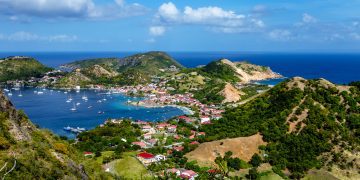
Friendship Bay is a harbor on the south coast, and there is a daytime anchorage at Petit Nevis, but Bequia’s main harbor is Admiralty Bay. It is a huge, well-protected bay with Bequia’s only town, Port Elizabeth, at its head. Small hotels, bars, restaurants, and shops spread from town along both shores, strung together in the south by the Walkway. This delightful coastal path, renovated and extended by Action Bequia, meanders along the shore, skirting a few trees, to Plantation House. Here it climbs the hill before bringing you back to the sea via a lovely wooden staircase. It then turns into a path that takes you to Princess Margaret Beach.
Much of Bequia’s tourist industry is based on visiting yachts, so you will find good yacht services, restaurants, shops, and handicrafts, many made only here. Bequians understand yachting: several yacht services are grouped together in Ocar on the northern shore. Others are in Port Elizabeth. Good dinghy docks are spaced around the bay, including one at Dockside Marine, a large and well-stocked chandlery. There are multiple canvas and sailmakers on the island, and Bequia has the friendliest and broadest range of on-water service providers, from which you can get everything from your water and diesel tanks filled to fresh bakery items every morning, laundry services, and garbage collection.

You will also have a great range of restaurants and entertainment, from relaxed beach bars to the more formal atmosphere of the larger resorts. Wander down the coast for a beach day and dine with your toes in the sand, overlooking the clear turquoise waters of Lower Bay. Afterward, dinghy over to Bar One, the Windward’s only floating bar, for a cocktail to go with the explosion of color that so often accompanies the Caribbean sunset. Paired with the friendly locals and accessible yacht services, it’s no wonder Bequia is such a popular yachting destination.
Doyle Guides contains the Eastern Caribbean’s most comprehensive and reliable sailing guide content, available in hard copy and online through a free mobile app, website, and Facebook group. (www.doyleguides.com)

St Vincent & the Grenadines (SVG) Entry and Exit Procedures
Ports of Entry
The port of entry for Bequia is Port Elizabeth. Details on the other SVG ports of entry can be found on Noonsite via the blue “Explore Country” button. www.noonsite.com/place/st-vincent-the-grenadines
Advance Paperwork
All visiting yachts should pre-register with SailClear prior to arrival.
For visitors from many countries, a visa is not required. Stays of up to 6 months can be granted.
Entry Process
On arrival, the captain should proceed to the customs, immigration and port authority offices with the SailClear notification ID number, exit zarpe, crew passports and boat paperwork. A 30-day cruising permit is granted at check-in, with additional months possible upon request.
Exit Process
Same as the entry process; clear out at one of the ports of entry.
Rates
Private vessels must pay a monthly cruise tax of $35 XCD per person on all crew and passengers over the age of 12. Charter boats must be in possession of an SVG cruising license.
Check SVG Clearance on Noonsite for more detailed information and updates [free log-in required]. This information is provided by Noonsite.com, specialists in worldwide formalities for yachts, and was accurate at press time.